BCM 112

Red Dog: Emphasising the ‘man’s best friend’ global stereotype

“Film-making in Australia has a long and distinguished history, dating back to October 1896 when a French chemist, agent of Lumière et Compagnie, and trained operator of the Lumière cinematographe, Marius Sestier, filmed passengers alighting from a ferry at Manly, Sydney.”

Directory of World Cinema : Australia & New Zealand

This is where it all started. The arise of the Australian Film on the global stage has brought upon new themes and genres which allow for stories to be told all over the country and all over the world. Folk stories have been brought to life with the help of visual film allowing for, not only Australia, but the world to visualise Australian culture.

A true Aussie classic is a film called ‘Red Dog’. A film about a loyal dog who aims to bring joy to his owner and the people around him/her. This emotional film, which will most definitely bring a tear to the eye, has placed itself into Australian folklore. His legendary travels have said that he travelled up to Asian countries such as Japan.
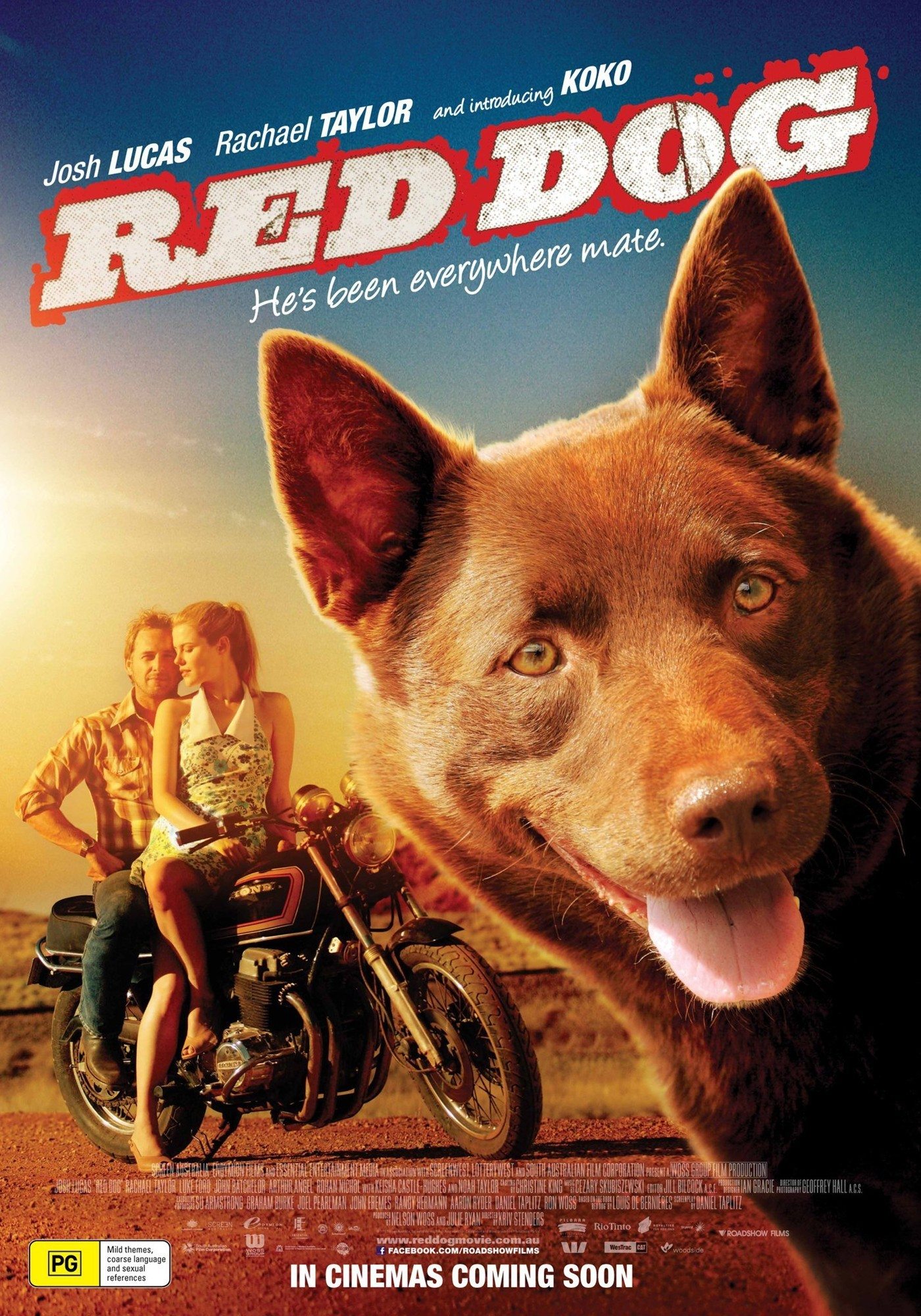
The movie truly epitomises the “man’s best friend” stereotype which is known all over the world. The movie showcases the courage and loyalty of the red kelpie and even just dogs in general. This ‘courage’ and ‘loyalty’ has become two themes engraved in the rich Australian history dating back to World Wars where ‘courage’ and ‘loyalty’ were honoured through rewards or medals.

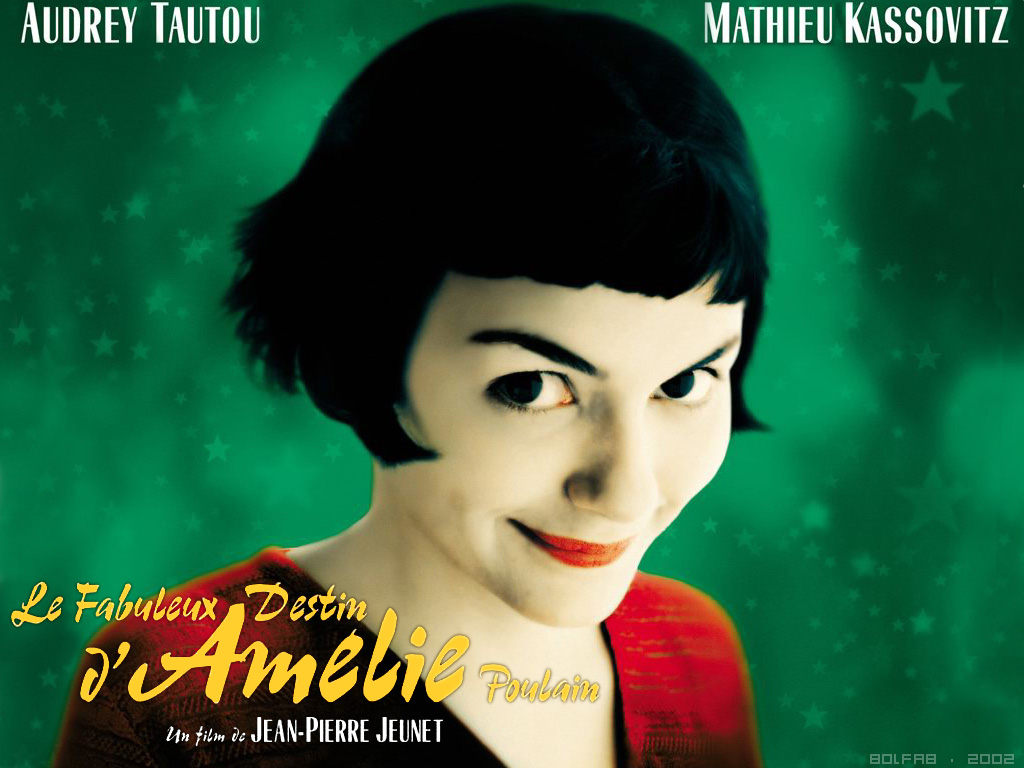
The movie explores the notion of hybridisation through the obvious inspiration drawn from the French classic ‘Amelie’. The movie is about a “do-gooder” who aims to bring happiness to lonesome people. ‘Red Dog’ is the animal representation of ‘Amelia’ and thus emphasises the hybridity of global film.
Production of Dog movies have increased over the years. The most famous dog movies include films such as Beethoven or 101 Dalmatians. However, one of my personal favourites include Marley and Me. The film arguably is the one of the best dog films including famous actors such as Owen Wilson and Jennifer Anniston.

The film shows similarities with Red Dog such as the beginning where they both take on a new dog as well as the dejected and sorrowful ending which will sure to bring tears to the eyes of any person. Overall both films showed significant success on a global scale, emphasising the impact dog movies have on a worldwide audience.

The term ‘man’s best friend’ was obviously coined long before the film ‘Red Dog’ yet has definitely helped emphasise the phrase. When entering the global film market, ‘Red Dog’ achieved awards such a wins at film festivals in Busan and Berlin.

James Muggeridge

REFERENCES

Directory of World Cinema : Australia & New Zealand, edited by Ben Goldsmith, and Geoff Lealand, Intellect, 2010. ProQuest Ebook Central, https://ebookcentral-proquest-com.ezproxy.uow.edu.au/lib/uow/detail.action?docID=584346.

https://www.sbs.com.au/movies/review/red-dog-review

https://www.nfsa.gov.au/latest/film-australia-chronology

https://thewest.com.au/entertainment/movie-reviews/movie-review-red-dog-ng-ya-157629
IDEATING – MODULE 1

During the ideating stage of my Digital Artefact – JJ.AND.CO, I made sure to incorporate the concepts ‘thinking’, ‘observing’ and ‘defining’ to benefit the overall plan for my DA as well as the content I have been producing. During this period of ideation, I have not created as much content as I will be in the future. This is because I have been learning and observing in an attempt to optimise this ideation period.

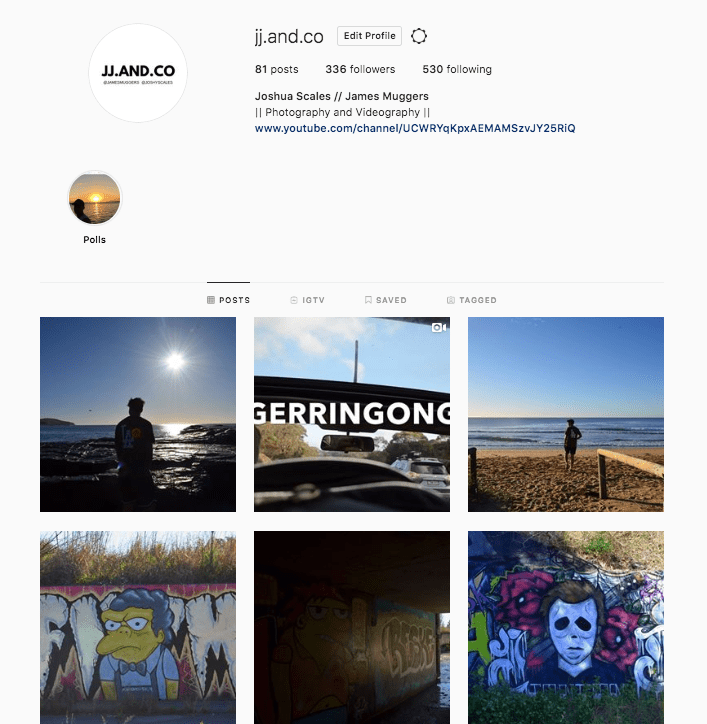
My Digital Artefact involves the creating of photography and videography-based content which is distributed across two platforms – Instagram and YouTube.

Whilst in the ‘thinking’ stage of my Digital Artefact, I have considered the ‘Simplicity Cycle’ to benefit from last semester’s progress and therefore fix any issues or add any utilities.

“As you learn and develop, new elements are introduced, and complexity increases.”

-Dan Ward

Last semester, the Simplicity slope was in action as I was producing content in the form of photos only with one video. Dan Ward’s, ‘Simplicity Cycle’, conveys a plan which content creators should choose to follow and portray a foundation for the content in the future. Through the thinking stage, I have applied the Complexity slope in an aim to increase and better my skills with videography. Increased production of videos on both Instagram and YouTube will show that my DA is becoming more complex as more content types are being produced.

As I am continuing my Digital Artefact from last semester in BCM112, I have aimed to maximise this stage of ideation to take time and observe other content around me, whether it’s from my peers or of the people who I look up to. This can include fellow university peers doing the same type of DA or Instagram and YouTube photographers or videographers.

“Taking the time and energy to source content from around the web is a great way to show that you have your thumb on the pulse of your industry.”

-Adam Wagner

Sourcing content from Instagram photographers such as Rory Kramer and Josh Packer coincided with videographers on YouTube such as Mango street and Robert Hill, will encourage myself to make for videos as I am increasing my skill and ability through learning.

Here is one video which I have learnt from and observed in an attempt to similarly use the same in camera transitions in the future.

Defining my Digital Artefact comes down to my own personalisation of the content I am creating and producing.

“personalisation requires an ongoing conversation between the creator and consumer, artist and fan, producer and user.”

-Kevin Kelly

I aim to create an ongoing conversation between myself and my audience through the feedback loop. During my last DA I incorporated the feedback loop heavily and will continue to do so during the prototyping stage.

This means that I want to aim to personalise my content to the traveller type of audience. Shooting at places around the NSW area, for example for my last posts I have been to a graffiti tunnel in Wollongong and Gerringong. These are two places which I would recommend exploring.

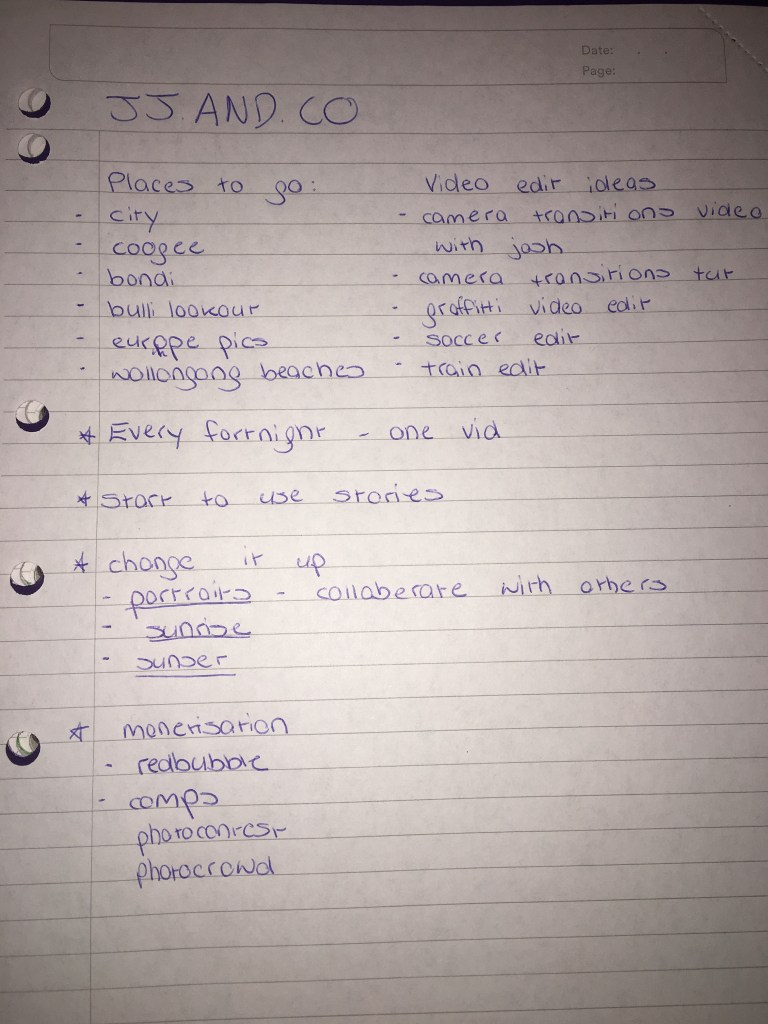
Overall, I have used the ideation period as a planning period. Observing what issues need to be fixed and what additions I will have to make. Planning and mapping out the future content creation of my DA helps myself to visualise my ideas and the direction I want to take.

James Muggeridge :))

REFERENCES

Click to access war_nd05.pdf

https://www.forbes.com/sites/forbesagencycouncil/2017/09/01/how-to-use-content-curation-the-right-way/#35910716b63e

https://www.edge.org/conversation/kevin_kelly-better-than-free

Logic: Cultural Catalyst or Criminal?

For a while now, Logic has been a distinguished and celebrated artist in the rapping genre. Known for his lyrical and technical skills, he also prides himself in spreading messages of equality when it comes to culture or racial identification. Yet, the messages he is spreading has always come under threat by critics based on the cultural appropriation of his art.

“Cultural appropriation is nothing new. For years prominent whites have been accused of borrowing the fashions, music, and art forms of various cultural groups and popularising them as their own.”

-Thought co

Logic has been criticised in the past for the constant repetition of “equality” or the “awkward mimicry of more successful rappers such as J. Cole and Kendrick Lamar”. This in terms of cultural appropriation is a consistent critique of Logic as the rap audience doesn’t buy into some of his “cheesy” messages regarding equality as some believe he is copying other rappers of the black race who have been preaching the same message long before. Yet, a misconception of Logic is that he in fact is biracial, starting a debate to whether he is allowed to repeat messages of equality such as former rappers of the black race.

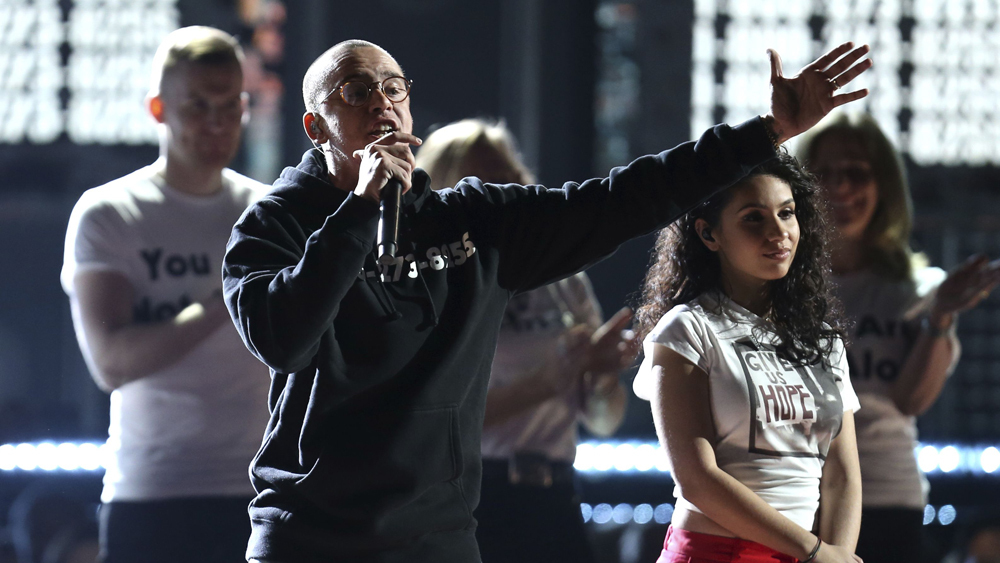
On a global stage, Logic became world-renowned when he performed his new song at the 2018 Grammy’s, “1-800-273-8255”. Performing with names such as Alessia Cara and Khalid, the message he distributed all around the world definitely breached the gap between his younger targeted fans and himself.

However, he was not the first to include themes of openness and inclusion regarding the mental health topic with other names such as Kid Cudi, Jay Z and Isaiah Rashad preaching the messages before.

In 2016, Kid Cudi shared a post on his facebook page announcing that he had gone into rehab due to suicidal urges. This post was shared 137,000 times as well as receiving 600,000 likes and 55,000 comments.

Critiques of this “touchy subject” can argue that Logic is stealing all the credit for the success of mental health associations such as the National Suicide Prevention Lifeline. However on the contrary, others including myself may argue that he indeed was the catalyst to success of the significant increase in the amount of younger people becoming more open to their mental health.

Stats provided by the National Suicide Prevention Lifeline reported that calls surged by over 50%, with visits to the website increasing from 300,000 to 400,000 over the following months. 

Logic also localises his music towards America and the issues which surrounds the country at the present time. In his recent song ‘One Day’ with Ryan Tedder, the music video portrays a Mexican family who is separated as they try to cross the Mexican border into America. This is a current and localised issue as the border security strengthens in the hands of Donald Trump and his “build a wall” movement.

To say that Logic has a significant affect on localised and global issues such as mental health and the inequality of races would be an understatement. Whether or not he was the catalyst of the openness of mental health in society, he definitely has increased the awareness of the issue.

REFERENCES

https://www.thoughtco.com/cultural-appropriation-in-music-2834650

Logic Deserves More Credit Than He’s Been Given For His Earnest Message And Hopeful Lyrics

https://www.billboard.com/articles/events/vma/7942341/logic-kesha-vmas-suicide-prevention-hotline-calls

The Message: These 3 Rappers Help Normalize Mental Health

Why did I choose Global Media as a subject?

I’ve always had a passion in media in the form of photography, film and music. I have
created content in the form of photography through completing my Digital
Artefact in BCM112 in my first semester. During this Digital Artefact I
experimented with videography, mixing different clips together in an aim to
create a video altogether.

In terms of global media, as I have travelled to countries like England, America and India, I feel like I am cultured when it comes to the different types of media
production and creation. In India, in particularly, the way in which movies were produced contrasted severely with our western culture in the form of ‘Bollywood’.

In terms of film, I am an avid watcher of movies, whether it’s modern or classical. I am
intrigued in the global scale in which certain movies are able to reach. My favourite
movies of all time include the Batman movies and Marvel movies. I am intrigued
by the supernatural themes and storylines of these movies as they convey a
dream-like vibe.

In recent times I have also payed close attention to the music world. I have been
intrigued by different genres in an aim to broaden my horizon. Music genres which
I listen to include Hip Hop/Rap, Dance and Pop.

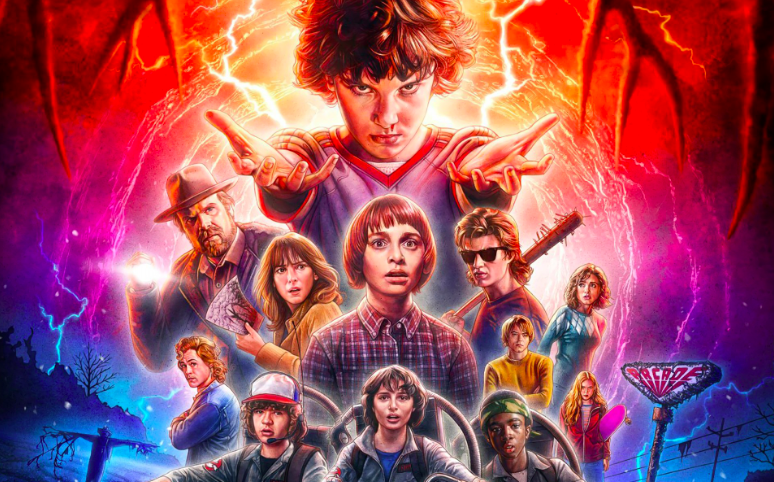
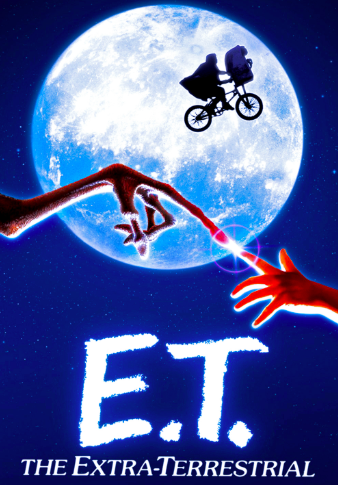
Favourite current TV show is Stranger Things. This also relates to my love for classical films and the 1900’s era, as in this TV series it is set in the 1980’s, portraying what life was like in a small town without modern day technology. This is incorporated with the classical thriller movies such as poltergeist and E.T. which are conveyed through the aliens and monsters in the first two seasons.

And that’s about it…

James Muggeridge

My DA – JJ.AND.CO

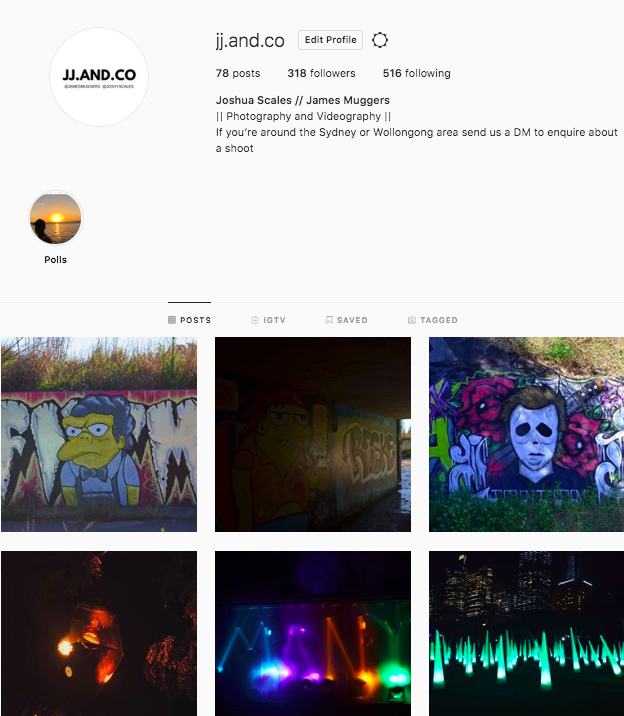
My DA ‘JJ.AND.CO’ was originally started by my best mate, Josh Scales, and myself, James Muggeridge. We started the Instagram to showcase our love for photography. Last semester I used this DA and thoroughly enjoyed it. I had lost my passion for taking photos during the HSC period and the Digital Artefact assignment reignited my love for creating content in the form of photography.

The concept of JJ.AND.CO is to create content in the form of photography and videography tied together with themes of exploration and travel. Production of content is intended to appeal to the traveller type of person, a person who loves to travel and explore new places.

The production of content will start with two main platforms – Instagram and YouTube.

Last semester, making content for my DA was made easy as I always found time during the week to take photos and create clips for a video. Yet an issue was creating the videos itself as I didn’t have any experience is creating that type of content before. However, I feel like my skills have improved through experimenting and learning the craft, meaning that I will be also producing video-based content.

My goal is to consistently post weekly and increase my following by applying techniques such as the feedback loop and hashtags.

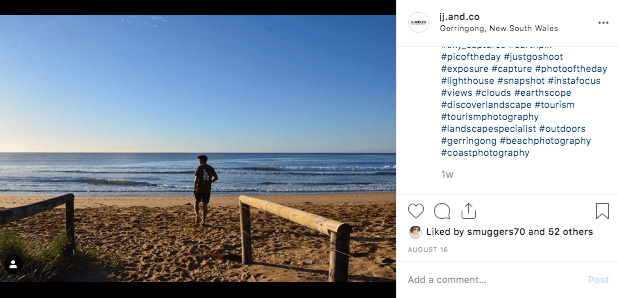
INSTAGRAM – @JJ.AND.CO

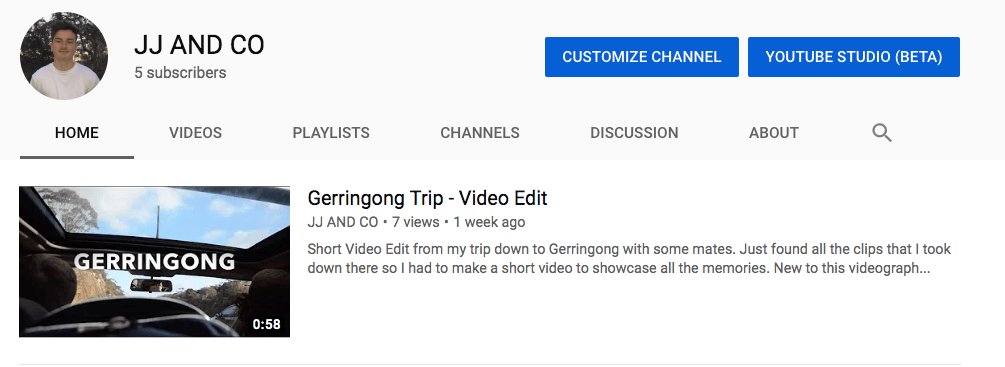
YOUTUBE – JJ AND CO

James Muggeridge :))

Stranger Things: Capturing a lost era

TV is always changing. As new technologies are being innovated and affecting the audiences experience of television, the spread of ways to watch your favourite TV shows are increasing. Cable TV, while still used, is not as popular as audiences are choosing to either consume TV through Foxtel, Tablets or Streaming platforms. So, in the coming years, will the new generation even remember such thing as ‘cable television’? Probably not.

Today, the platform in which I consume my TV from is either from Foxtel or Netflix. My only use for Foxtel is the Sport and Music Channels. Sport channels allow for live viewing of sports I like, such as Cricket, Football and NRL, as well as past broadcasts I may have missed. They also provide the innovative feature which allows for a consumer to record their shows to watch at a later date, something that needed a large and ‘complex’ recording machine back in the day.

The latest series I watched on Netflix was Stranger Things. A short science fiction TV series. It follows a group of kids who in the end have to fight monsters all to save a small town in America called ‘Hawkins’. An older and mature audience will resonate with this type of show as it creates a sense of nostalgia resembling their own childhoods. I think it really resonates with me as I’ve always wanted to know what it really was like to live in the same kind of era or generation. The clothes, the soundtrack and the small-town family vibe you receive is enough to make an individual envy the fictional characters.

Characters explore a true coming of age story as the children in the show learn a lot about themselves. They face both the physical challenges such as the aliens throughout season one and the mental challenges of being a child in the 1980’s. Yet the togetherness of the children empowers the small town of Hawkins to defeat any challenge which came in their way.

The TV series uses political undertones mixing with a storyline that is reminiscent of classical horror/thriller films. The monster in season one, which seems to overwhelm the small town, conveys themes similarly from other classical films such as ‘Alien’ and ‘E.T.’. The vibe which the children create throughout the movie captures a nostalgic take on the domestic era in the 1980’s, similar to Steven Spielberg’s ‘The Goonies’. These classic films all resonate with a standard film audience as they were and are popular on a global scale.

In regards to the global scale of the TV series, the first episode was watched by 40.7 million households. This enormous number shows the popularity of the TV series and how well the themes and genres resonate with the viewers on a global scale. The era in which the series is set in explores an era which many countries did have to endure. An era which encountered the start of technology and therefore television.

Stranger Things truely displays the lost and forgotten era of early technology. Such technologies such as cassettes, cable television and radios have become lost in the new era of global innovative technologies.

James Muggeridge

https://www.digitaltveurope.com/2019/07/09/netflixs-stranger-things-3-breaks-records/

https://au.ign.com/articles/2016/07/08/stranger-things-season-1-review

https://books.google.com/books/about/The_Television_Studies_Reader.html?id=pf5QEQkbePsC

Algorithmic control I

Intellectual Property and the Content Control Industry

Since the first appearance of copyright in 1790 with the ‘statute of Queen Anne (1710)’, content creators are able to copyright their own content to disallow other use from members of social media platforms. This law encourages people to create content in their own unique way. Nowadays, aspiring content creators now have to be knowledgeable in the laws of copyright as copying a major piece of content can lead to legal implications.

So, what can you do?

-Content in the Public Domain can be copied and remixed

-Fair use acts as a defence for copyright

Copyright allows content creators to copy the ideas and concepts yet not the material expression. This notion is explored in the Nike v Rentmeester case. In this case Rentmeester sued Nike for resembling the ‘Air Jordan Jumpman Logo’

A detailed summary of this case is given in the audio below.

For further information on copyright watch the video below

Algorithmic Control III

Does Australia and Australian Citizens really value their privacy?

Privacy is something that a person should be allowed every day of their life. Yet, does a person really value privacy? In my opinion, with the influx of social media, the notion of privacy is thrown out the window as most people who use apps such as Facebook or Instagram are putting their lives out for their ‘friends’ to see. Why is ‘friends’ in quotation marks? Well, that’s because most people’s friends list span up to 1000 people. And does anybody have 1000 friends? Well no and by saying all of this I AM A HYPOCRITE.

When comparing Australian Privacy Laws to US laws and UK laws, our legislation in regards to privacy and therefore security is weak. Thanks to a report by The Conversation, the ‘weak’ laws regarding privacy are analysed. 

As a user who has been breached of the privacy act you are unable to sue. This means that users are unable to benefit from an intrusion of privacy.  

More evidence to show that privacy laws are weak in Australia are that there are poor policing of consent agreements. This means that when you register for Facebook and have to accept the ‘terms of agreement’, there a lot more little details that are involved. 

In 2018, a statutory was put to debate in the government yet lost, conveying what privacy really means to the government.

Algorithmic Control II

Open Sourced vs Closed Sourced Software’s

On the internet, software can either be open or closed. This meaning that the code is publicly available or unavailable to users. This can play a part in what software type is used by the audience. By delving into both sources, you are able to achieve a comparative study between the two software’s. 

Open Source is publicly available to users as it uses a code which is allowed for modification as it is free. An issue for open source software’s is the risk that if it becomes closed, generativity dies. Open Sourced products have more risks which attach itself with the product than the audience thinks. Security is a big issue for not only the audience but the big multi-national companies. This is seen in the Facebook drama which evolves around its security.

Closed Source software is not available to public as the code is not accessible. The software usually keeps to a stable and focus product, while also costing money. A positive includes service and support. This is a closed sourced software’s greatest advantage. Manuals and customer service is available with the software, making the high cost of the product worthwhile. 

A common example of a battle of software sources is the battle between Apple and Android. Both software’s aim to one-up each other through customising their products and adding innovative features.

Internet Paradigm IV

Simulation and Hyperreality

Today’s society can be described as fragmented or broken through the reliance we have on technology to live our lives. Even though technology is needed in our lives, it can create a negative stigma. 

“An effective simulation will not merely deceive one into believing in a false entity, but in fact signifies the destruction of an original reality that it has replaced”

Simulation/Simulacrum theorist – Jean Baudrillard

Hyperreality is where a certain environment is made up or simulated to make up for a ‘broken’ world. Virtual Reality is a type of hyperreality which brings upon the allowance for someone to create their own new life, yet not real. Free for personalised customisation and ideation which is not allowed in the real world. 

Due to the evolution of technology, hyperreality and simulation is becoming increasingly difficult to resist. Yet movies such as “Ready Player One’ gives us as an audience belief that simulated worlds can be resisted. 

This link shows, with the increase of new technologies, that we are getting close to the world of Ready Player One, conveyed in the movie

https://www.windowscentral.com/how-close-are-we-ready-player-one