WHAT IS THE REASONING TOWARDS STUDENTS CHANGING OR DEFERRING FROM THEIR ORIGINAL DEGREES?

My research project looked to explore the reasons to which students change or defer from their original degrees. I used a survey and an interview as methods for research to collect statistics from the BCM degree. The survey conducted collected 31 responses through 11 survey questions. The interview was conducted with one individual acting more like a focused study. Both were distributed on the BCM212 hashtag through linking my survey and asking for interviews.  

My research was split into three stages of questioning: 

  1. How many students have changed or deferred within current BCM cohort 
  2. What was the reasoning for changing or deferring to BCM 
  3. Have students thought about changing and why they chose to stay with BCM 

To obtain the percentage as to how many students have changed degrees to get to BCM will provide a foundation to how often it occurs.  Receiving the reasoning to why people change degrees or defer will provide popular trends and factors showing why people do it so often. Finally, to receive a percentage as to how many people think about changing or deferring will give me an insight into how common it is for students to even think about doing it. On the other hand, being equipped with the reasonings as to why they stayed will allow me to explore the strategies or factors which BCM inherit compared to differing degrees.  

WHAT AMOUNT OF BCM STUDENTS HAVE CHANGED OR DEFERRED. 

I was surprised when finishing my survey as the number of people who had changed degrees (35.5%) when combined with changing to a single (19.4%) or a double degree (3.2%) was significantly higher altogether compared to people who have been in the BCM degree from the start (35.5%).
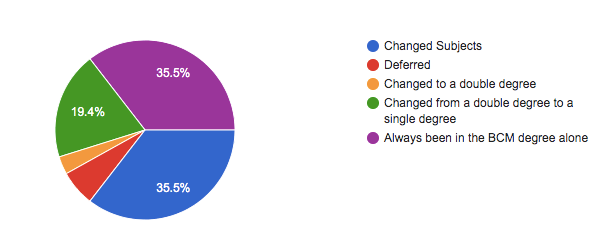
This was my most important and surprising finding based on the conclusion of results. Altogether 65.5% of the BCM cohort surveyed had changed deferred from their original degrees compared to 35.5% who had stayed in the BCM degree from the beginning. 

WHAT WERE THE MOST POPULAR REASONS FOR STUDENTS CHANGING? 

In doing a university degree, the main aim is to achieve an end credential which acts as a pathway to a chosen career. In doing this a student must pass every subject within the degree. To do this you must have some sort of achievement motivation (Lieberman and Remedios, 2007). This is a concept which explores both the intrinsic and extrinsic factors contributing to the want to pass a subject and move towards that end credential.


However, this differs in every student as a loss of motivation either intrinsically or extrinsically can force students to change or defer from their original degree.


In my survey, I included both open and closed questioning to provide in depth and more meaningful answers while also included stagnant answers allowing for popular trends (Examples of Open-Ended and Closed-Ended Questions, n.d.). My most popular reasons included not liking the chosen degree (54.8%) and changing career paths (38.7%).
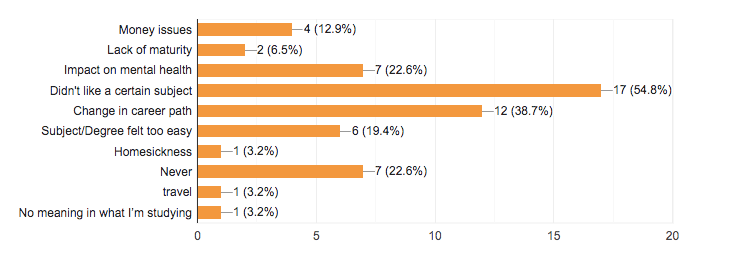
The loss of interest in a degree comes down to the intrinsic decrease of motivation. However changing your degree based on your chosen career path can be both intrinsically and extrinsically driven. Through a study done by the ABC, only 71% of graduates secure a job straight after university (Robinson, 2017). This statistic explores the uncertain nature of getting a job when finishing university and links to the idea of a changing career path.

When asking for a specific reasoning to why they changed or deferred a lot of the responses were specific to stress and degrees becoming overwhelming, leading to disliking the subject. This does, in fact, link to mental health which is an important topic of discussion today.

HAVE STUDENTS THOUGHT ABOUT CHANGING OR DEFERRING AND WHY DID THEY CHOOSE TO STAY WITH BCM?

As a media degree, social media is heavily incorporated within the syllabus. The factors within doing a BCM degree include having a twitter platform, having to regularly post on this platform and the need to put yourself out there as a media student. These features can impact students on changing degrees yet on the other hand it can attract certain individuals into choosing the degree (Acun, 2020).

As I do a double degree in BCM and Journalism, I have thought about changing before due to the overwhelming stress which comes with doing a double degree at times. Yet what made me continue was the positive factors which consist within the subject, such as the ability to follow my passion and be creative.

Whilst in the BCM degree, 51.6% of students had thought about changing or deferring during the BCM degree. The original reasoning to wanting to change or defer included a loss of interest towards the degree and uncertainty about their future. However, students chose to stay within the BCM degree because of the challenge of the degree and the content taught within it.

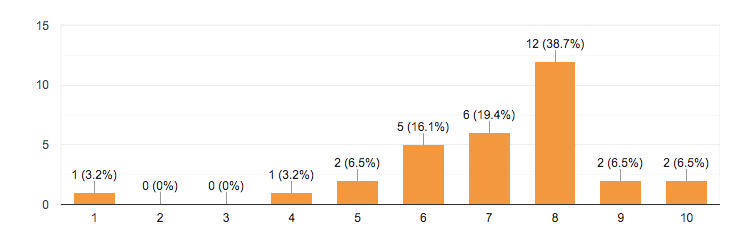
Overall, there was 38.7% percentage of current BCM students who were satisfied 8 out of 10 with the degree. This shows the satisfaction students have with the BCM especially in particular with the survey conducted during the COVID-19 period.
CONCLUSION

Due to the limited sample of research consisting of only the BCM cohort, this research cannot provide sufficient evidence on a large scale. However, identifying popular reasonings to why students change and defer can be linked to the specific degree and the idea of achievement motivation as a concept which leads to change. I want to leave my audience with the idea that change is inevitable for some individuals and it takes time for certain individuals to find a degree which specifically suits their interests. Through research, BCM has shown to be a degree which manages students well, appealing to students creative and social interests.

BIBLIOGRAPHY

Lieberman, D. and Remedios, R., 2007. Do undergraduates’ motives for studying change as they progress through their degrees?. British Journal of Educational Psychology, 77(2), pp.379-395. <https://onlinelibrary.wiley.com/doi/full/10.1348/000709906X157772&gt; [Accessed 6 June 2020].

Robinson, N., 2017. Uni Students Taking Longer Than Ever To Finish Degrees. Abc.net.au. <https://www.abc.net.au/news/2017-11-29/university-students-dropping-out-in-record-numbers/9203636&gt; [Accessed 7 June 2020].

Examples.yourdictionary.com. n.d. Examples Of Open-Ended And Closed-Ended Questions. <https://examples.yourdictionary.com/examples-of-open-ended-and-closed-ended-questions.html&gt; [Accessed 8 June 2020].

Acun, I., 2020. University Students’ Social Capital, Social Media Usage And Democratic Citizenship Behaviours. Eds-a-ebscohost-com.ezproxy.uow.edu.au. <https://eds-a-ebscohost-com.ezproxy.uow.edu.au/eds/pdfviewer/pdfviewer?vid=3&sid=944c00bc-0071-4bde-9623-f7dc869f4605%40sessionmgr4007&gt; [Accessed 6 June 2020].

RESEARCH PROPOSAL

Starting University in 2019, I was excited to really hone in on the true meaning of media and what aspects/notions makes you great at content creation within the media industry. Throughout the 1st semester I didn’t have any problems, apart from the inevitable stress which comes along with exams and assignments. I truly enjoyed my first year as it allowed myself to pursue a long lost hobby, photography, whilst also pursuing my true dream in journalism.

However, this is not case for a lot of people at university. Some students disregard the work because of a lack of interest or the impact it has on their mental health. Even so, some students pick a subject based on an impulse and soon regret it. This then leads to a student changing degrees, deferring and or dropping out ie. my research question which I will be proposing.

WHAT LEADS TO UNI STUDENTS CHANGING DEGREES, DEFERRING AND OR DROPPING OUT?

I know specifically within the BCM course, putting yourself out there can be daunting and was daunting for fellow peers which lead to a few people deferring or changing subjects. In particular, the online presence in BCM112, whilst being personally enjoyable, would have forced students to consistently post on their own media domain. I did see this coming in a media degree and the subject being social media oriented.

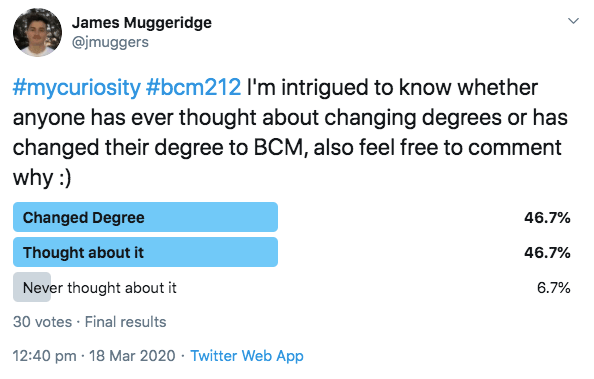
As seen above in the poll, my question is clearly prominent and would attract much discussion. With a small number of people who have never even questioned their degree and a large sum who have both thought about it or have changed degree.

My poll was made in particular for people who have changed degrees to a media and communications degree. Yet, as I’m specifically aiming towards the emotional reasoning as to why students change degrees, defer or drop out, I will draw research through comments by fellow peers of the BCM degree.

Mental health is an important factor to remember when talking about the factors which lead to a student stopping their university degree. It is said that when becoming a teenager, you become more independent and decision making starts to become an individual responsibility, which can be hard for a struggling university student.

My aim with my research would be to delve into a more emotional understanding as to why students drop out, straying away from the physical stats and facts.

Some factors which have already been researched include:

  1. Maturity
  2. Failure
  3. Impact on mental health
  4. Only going to make the parents happy

Whilst researching, I came across a Huffington Post article which spoke about the impact that parents have on choosing to go to university. This is an interesting discussion as I feel like it has changed over the years as parents see that going to university isn’t the only way of doing your intended career. But, in regards to your mental health, parental pressure can affect a students emotional state leading to poor marks or a the student not enjoying the degree chosen. It will be interesting to see if that will prove to be a popular reason.

Another source talks about the debt which surrounds a university student after finishing the chosen degree. With the debt averaging between $20,000 and $30,000, it has a significant affect on the choice of dropping out or even changing degrees. This comes with the fact that a university degree doesn’t mean that it is for certain that you will get the chosen career that you have studied for. This can heap a lot of pressure on a student, forcing them to weigh options and be indecisive possibly leading to them deferring or changing degree.

With this being said, I believe my question is relevant in today’s society as it will provide emotional reasoning as to why students change or stop their degree. I feel I can enjoy researching this particular topic as it has always been something i’ve been intrigued by over the last two years whilst at university.

JAMES.M

References

Adams, A,. R 2015. ‘How mental health alters decision making’. Stanford. Viewed 31 March 2020. <https://news.stanford.edu/features/2015/decisions/disease-state.html>

Baxter-Wright, D., 2018. ‘7 Students On Why They Dropped Out Of University‘. Cosmopolitan. Viewed 1 April 2020. <https://www.cosmopolitan.com/uk/worklife/campus/a20682119/why-students-dropped-out-of-university/>

Aston, E,. R 2018. ‘Why Students drop out of college, and how can we do something about it’. Huff Post. Viewed 1 April. <https://www.huffpost.com/entry/why-most-students-drop-out-of-college-and-how-we-can_b_5a5d9f77e4b01ccdd48b5f46>

Kokemuller, N,. R 2017. ‘Effects of dropping out on college students’. The Classroom. Viewed 1 April. <https://www.theclassroom.com/effects-dropping-out-college-students-11601.html>

Dayman, I,. R 2018. ‘Was your university degree worth the debt? High-paying jobs aren’t a sure thing, experts say’. ABC. Viewed 1 April. <https://www.abc.net.au/news/2018-04-11/was-your-university-degree-worth-it/9637850&gt;

Salainis

I had learned already many of the Outland methods of communicating by forest notes rather than trust to the betraying, high-pitched human voice.

None of these was of more use to me than the call for refuge. If any Outlier wished to be private in his place, he raised that call, which all who were within hearing answered.

Then whoever was on his way from that placed hurried, and whoever was coming toward it stayed where he was until he had permission to move on.

The artist is the creator of beautiful things. To reveal art and conceal the artist is art’s aim. The critic is he who can translate into another manner or a new material his impression of beautiful things.

Salainis

I had learned already many of the Outland methods of communicating by forest notes rather than trust to the betraying, high-pitched human voice.

None of these was of more use to me than the call for refuge. If any Outlier wished to be private in his place, he raised that call, which all who were within hearing answered.

Then whoever was on his way from that placed hurried, and whoever was coming toward it stayed where he was until he had permission to move on.

BCM212: My Curiosity

WHAT LEADS TO UNI STUDENTS CHANGING DEGREES, DEFERRING AND OR DROPPING OUT?

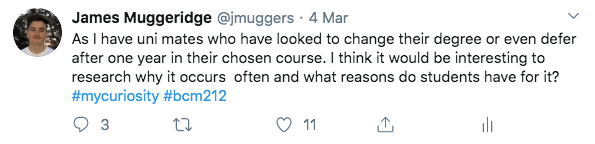
After spending the uni break surrounded by friends who have deferred, changed subjects or dropped out, I’ve been curious about the reasoning to why this happens so often. I’m intrigued to know why people do it, as personally, I love the degrees I’m doing and haven’t really thought about changing. Yet I do think about how it may be hard to get a job after uni, a reason which may influence students in changing their subject, dropping out or deferring. 

The emotional reasoning to why people do it and the factors which contribute to the regular occurrences of it, can provide a more emotional insight on student experience. Whether it’s cause they don’t like the subject, being homesick, being lost or fears over employment. These I believe will be some of the main reasons yet I am intrigued to find out more.

As shown by SBS NEWS, in 2017 the drop out rate was at a decade-long high. Researching for more relevant statistics is hard to find as they are not distributed over the internet. Yet, the emotional factors have been studied before and can be easily analysed. An article by The Shorthorn, written in 2012, listed 10 popular reasons as to why students changed their major. With no real evidence shown that the research was completed, I want to be able to show credibility and reliability to my research and really focus on achieving emotional responses rather than physical stats and percentages.

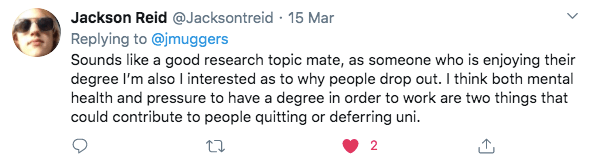
By running surveys on students from the uni from different degrees and differing ages, I hope to encounter an array of reasons and opinions on the topic. This will help myself to narrow down a popular reason as to why students stop their degree. Already in my tweet I had feedback from fellow uni students which has influenced my decision to stick with this topic as I’m sure there will be many more insights. Surveying people from different subjects may also link certain emotional reasons to subjects.

James.M

CONVERGENT WEBSITE

BLEACHER REPORT

In today’s society, the use of social media is integral to the success of a journalistic news platform or broadcasting network. Correspondingly, the power of visual storytelling techniques can also have a significant effect to the overall success of such websites.

‘Bleacher Report’ is an American journalism website based on American sports such as American football, basketball, baseball and hockey. They provide updates on games around America while also incorporating news stories in a section called ‘The Mag’.

‘The Mag’ displays an array of different stories written by journalists within the business. These stories are multimedia stories incorporating video or images to compliment the text.

Bleacher Report resembles a journalistic website which gains success from social media. This multimedia aspect ensures their audience are able to gain stories from an array of sources. They are based on all three of the main social media platforms: Facebook, Instagram and Twitter.

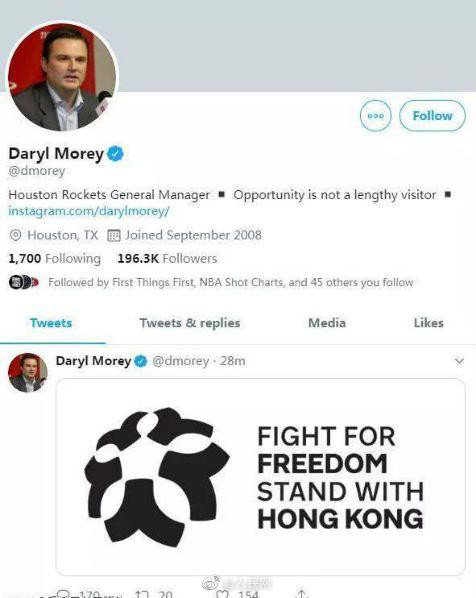
The article I will be analysing, ‘The NBA can’t change China; Deal with it’, comes off the back of the controversy regarding NBA and China. Bleacher Report journalist, Howard Beck, draws upon the “long and complicated” relationship between NBA and China which few seem to acknowledge.

The current controversy started with Houston Rockets general manager, Daryl Morey, tweeted in support of the pro-democracy demonstrations in Hong Kong. In tweeting this created a online war which has spurred journalists from around the world (many from China) to put forward their own personal opinions, mainly in the form of outrage. Yet this controversy has only added to the long winded online war between the NBA and China.

In saying this, I believe at the time of publication, this story was extremely newsworthy. As the conflict between NBA and China has spanned over a long amount of time, as well as the countries involved being ‘elite nations’.

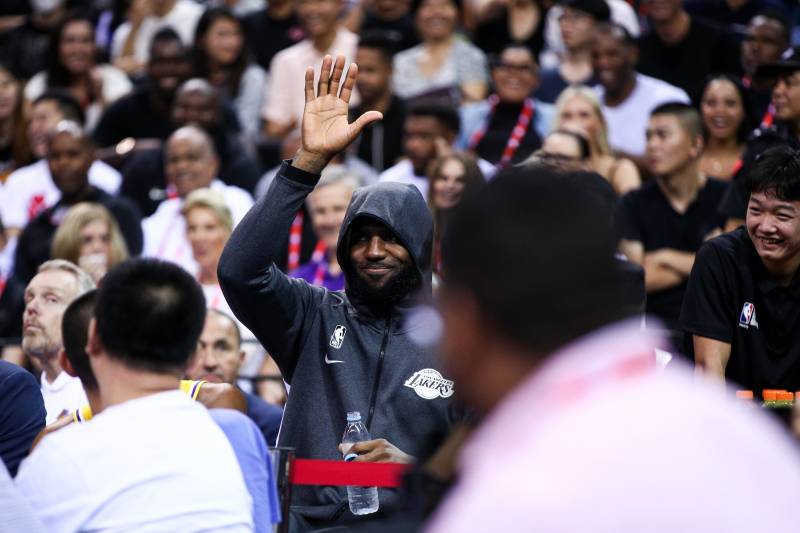
Beck takes on an argument against the critics who were seen to be slandering the NBA. He uses images of Lebron James and members of the Houston Rockets team in 2004 displaying the business related relationship which has spanned decades between the NBA and China.

He does this to show the positives which the NBA has done for basketball in China. Having pre season exhibitions staged in China has only been beneficial to Chinese fans of basketball. Yet China seems to forget the positives and highlight one mere tweet.

At the beginning of the article, Beck uses the repetition of “China” to display all the wrongdoings which surround the country in today’s society, such as “China intimidates, harasses and detains journalists”. He also continues to convey forward his argument though the use of syntax sentencing, listing many problems with the current debate.

IGNITE THE POWER OF SPORTS CULTURE TO MAKE MOMENTS THAT MATTER

In a pursuit to learn more about this website, the about section portrayed this phrase in a salient manner. Personally, I believe to really highlight moments in all sports, you must incorporate the culture which surrounds it, as culture remains an underrated factor in the playing of sports, the viewing of sports and the analysing of sports.

Our favourite teams bring people together, keep family members close, bond people from different generations.
Bill Simmons – American sports journalist

Bleacher Report stands by these words to authenticate and stand out from other journalistic websites. Appealing to the importance of culture within sports is as main reason as to why they have such a global and enormous audience. To add to their niche, they have a multimedia aspect derived from their use of social media and an incorporation of images/videos with a thorough text.

James Muggeridge

CONTEXTUAL ESSAY – JJ.AND.CO

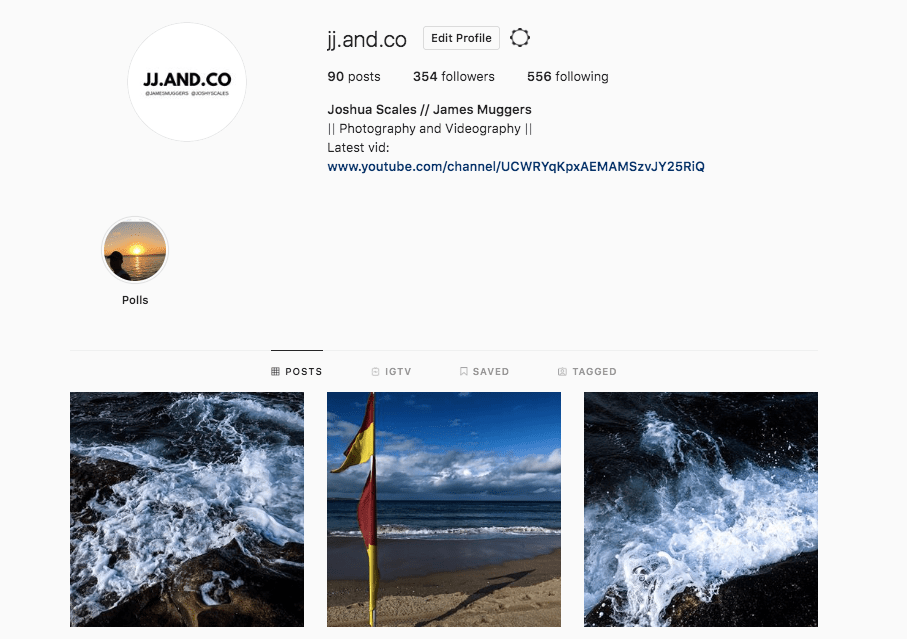
My Digital Artefact was JJ.AND.CO. A photography and videography, instagram and youtube account, based on exploration and travel.

I appealed to a travel based audience through the content types (landscape, sunrise and sunset photography) as well as hashtags used.

I applied the feedback loop through using the story feature to grasp feedback from my audience on whether they liked the content I was distributing.

My content was consistent in regards to views, likes and distribution time. I would post 3 photos weekly keeping an aesthetic while reaching an average like count of 40 to 80 likes a post, depending on the content type. 

I started my DA in the first semester of BCM112 where there was a lot of room for ideation since it was a fresh project. I made the account to express my passion and skill for photography, aiming towards a travel based audience. Instagram was and still is a relevant form of social media which is why I mainly used it as a platform for the distribution of content. 

Continuing the DA into this semester is a small regret looking back as I wasn’t able to ideate as much as other new DA’s. Another issue is that I started running out of photography and videography ideas which lead to losing passion for the DA overall. When taking photos I wouldn’t be satisfied with the end product. 

However a positive of my DA was the main ideation within my DA, incorporating a videography aspect. Making videos was personally rewarding as I enjoyed making them and the overall end product. It was also rewarding as it was the most liked type of content, as well it reached the most impressions and views. This video editing aspect would be something that I could incorporate into next semester’s DA.

Overall my DA did not incorporate rapid prototyping and rapid iteration, yet I did somewhat incorporate early ideation through a videography aspect.

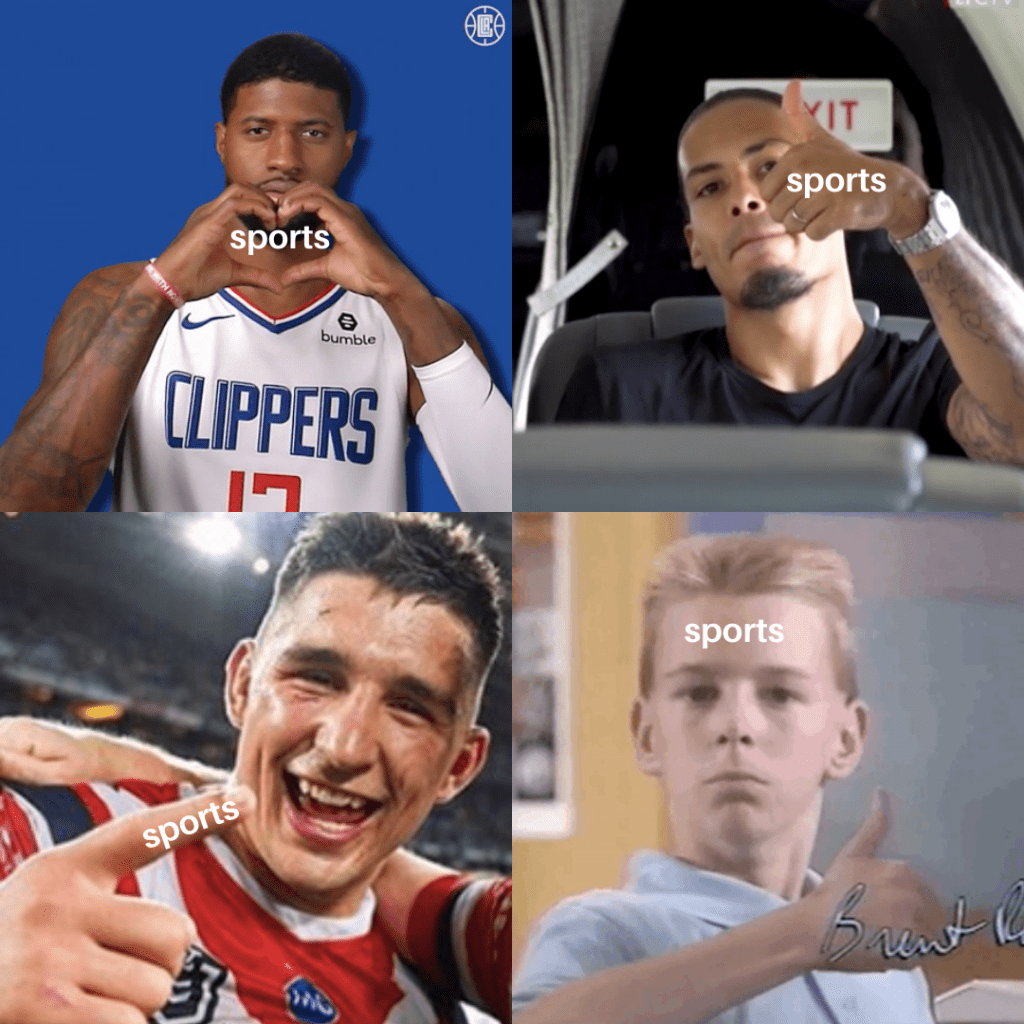
This leads me to my new ideation stage for my new DA. I have thought of two ideas, sports reviewing and or a podcast. When critically reflecting on my past DA, there are quite a few mistakes or issues that can be recognised to make sure I do not do the same in the next DA. An example of this is picking a DA which is easier in regards to making content. Unique photos and videos became hard to find towards the end of this semester especially. With sports reviews I am able to create content at home as well as research games easily. Same goes to podcasts as I can create videos at home as well as research ‘trendy’ topics on social media. 

A positive to starting a new DA is that there is a lot of potential for ideation and prototyping. Furthermore I can start building a portfolio to a future in both journalism and or media & communications. 

James Muggeridge :))

MAKING – MODULE 3

My Digital Artefact was JJ.AND.CO. A photography and videography, Instagram and YouTube account, based on exploration and travel. Yet recently, or in the past 3 weeks, I have become inconsistent and therefore have stopped uploading content on both platforms. 

Another reason to why I will stop this DA is based on the lost passion I’ve had for taking photos. Personally, I have found it hard to find different spots that I haven’t been to yet to take different photos. And whenever I take photos I either have not liked it or just feel like it’s the same as everyone else. 

With this said, I am back in the IDEATION stage and have already begun thinking of options for the future of my degree. I have thought of two options for next semester, sports reviews and or a podcast.

SPORT REVIEWS

Picking sports reviews would be beneficial as I also do a double degree involving Journalism. This would mean I could build a portfolio towards a future in sports writing/blogging. My main idea was to make an Instagram linking to a personal website/blog about football. In particular, the EPL which is the English Premier League. In my opinion it is the best league in the world and as I am already an avid viewer, writing the blogs weekly should be quite easy.

In terms of MAKING content, for the sports reviews I would be eventually posting weekly reviews of certain games. However to start the account I would post reviews of the ‘season-so-far’ of each team. I could also write player reviews for key players during the season so far. Personally, I believe there is massive potential in regards to content for this type of DA.

Inspiration would be drawn from Instagram sites such as Sports-bible and epl_newsupdates. Both Instagram accounts display a similar type of content that I would be posting.

PODCAST

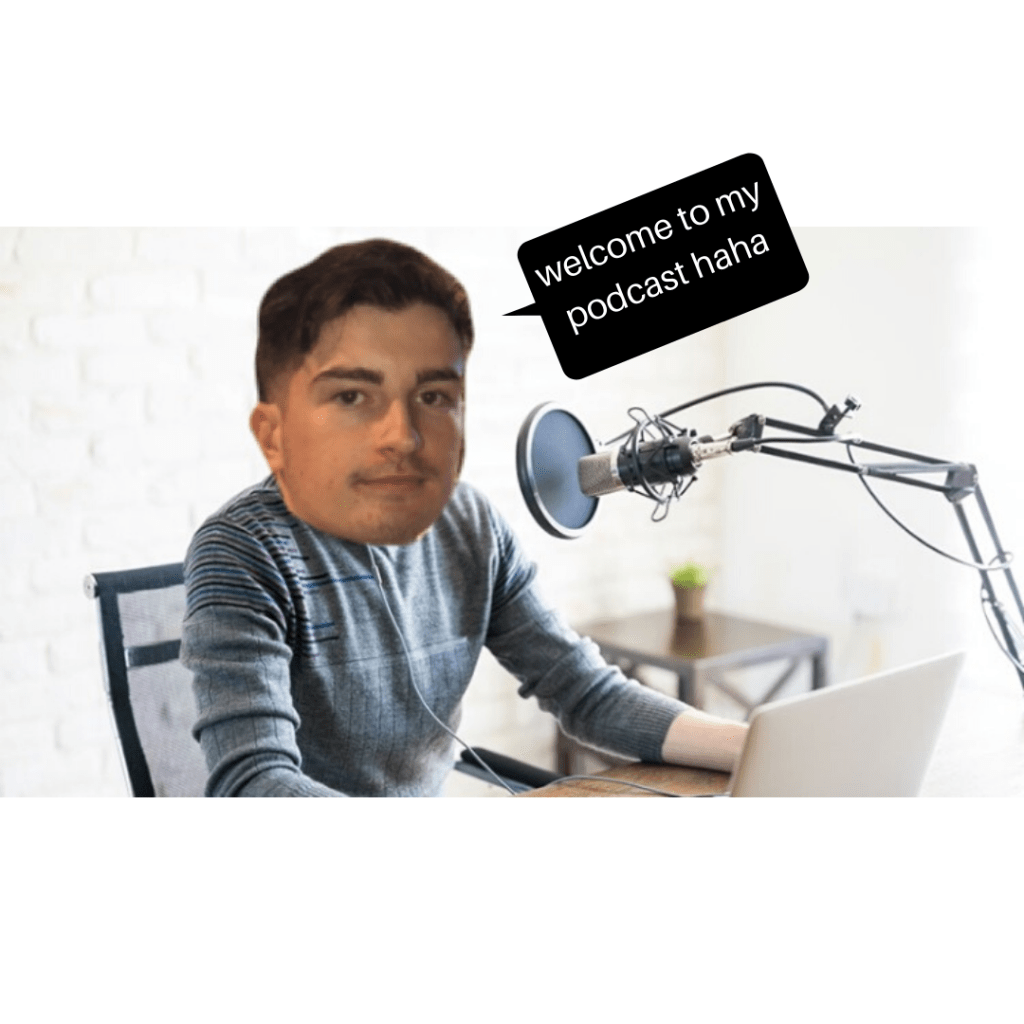
To choose podcasts would mean I would be leaning more towards the media and communication side of my degree. Talking about relevant and societal events/issues whilst still incorporating video editing, as it is still a passion of mine, would be ideal. There would also be potential to fuse in the sports reviewing aspect into the podcast as it may give a more raw and personal view to the subject that I talk about. 

Content creation for podcasts would involve edited and unedited videos. Ideas would be personalised yet also directed by a feedback loop. Content would be distributed on YouTube yet also on Instagram in the form of short clips directing my audience to the YouTube video. As I said above I would love to incorporate a video editing aspect into the podcasts to hopefully add a comedic effect and show off my developed skills from the start of this semester.

Inspiration would be drawn mainly through watching Joe Rogan’s podcasts regularly, as well as the house of highlights podcast on the NBA.

James Muggeridge :))

WHAT’S HIDDEN – INEQUALITY

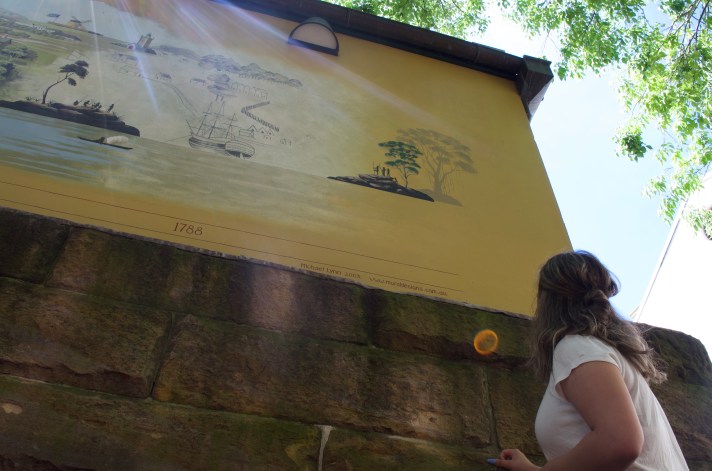
Zoe looking at a mural showing the change in landscape located at The Rocks

“For some people it is a daily occurrence that they receive racism, for some it happens so often that they forget what it looks like”.

In Australia, there are many inequalities which Indigenous peoples have to face day by day. Of course, issues have been adjusted positively to a certain extent, yet a complete equality has not been meet.

Zoë Brown is a proud and outspoken Aboriginal woman from three Aboriginal tribes – Dunghutti, Gomeroi and Wiradjuri. She comes from a rich Aboriginal heritage, however somewhat in which she doesn’t know. This is because of the colonisation of traditional Aboriginal land in 1770. 

The impact of colonisation is the main root which stems the many inequalities which surround Australia in current society. Racism in particular has had a major effect on Zoë on a personal note. Her family has been challenged with the ordeal of racism on a regular basis.

“My grandfather is in the situation as whenever we hang out, we always get the dirtiest looks and people always act rude towards him…”

“…he said it doesn’t bother him… I wish it wasn’t like this, but this is the reason why people like to keep hidden“.

Zoë’s boyfriend, Josh Scales, is linked to an inequality surrounding Aboriginal identity called ‘proof of Aboriginality’. Josh has a mixed background in which his Mum’s side is Asian and his Dad’s side is Aboriginal.

Josh in comparison to Zoë is much more secretive and restraint when talking about his thoughts towards the subject. For him, there is a reason to his quiet state towards the matter.

“Whenever an individual speaks out about their culture they are normally criticised by a group of non Indigenous people who believe differently”.

He continues to talk about Zoë and her “hardworking” quality which makes her such a inspiration to other Indigenous people.

“Zoë is a very passionate and mature young women, she is hardworking, extremely caring and very driven towards anything Indigenous”.

With maturity, Zoë has become more open to talking about the issue of inequality in Australia, yet she has not always been outspoken. It was until older as to when Zoë realised that she would teach and debate through using her platform.

“I plan to be a role model for Indigenous youth through inspiring them to be successful and inspiring them to be the best they can be no matter what life throws at them”.

In the face of adversity, Zoë has the confidence and passion in her culture to create change and limit inequalities towards Aboriginals.

PROTOTYPING – MODULE 2

My DA is JJ.AND.CO and is still heavily based on photography and videography. During the 2nd major stage of ‘media making’, prototyping, I have been making sure to adhere to the sub stages – making, breaking and remaking.

MAKING

Whilst in the making stage, I based my research on the reading by Smart Blogger called The Ultimate Guide to Content Curation. The reading portrayed a set of stages in which deems the ultimate content curation. This involves defining the concept of curation as it involves many steps such as sourcing, repackaging and curating to a specific audience.

Through the research made on ‘making’ as a stage, I really tried to focus on sourcing within my DA. As stated in the DA I used tools such as YouTube videos and an interview with a professional photographer in a way which would source relevant and similar content. In doing this I am aiming to boost my knowledge when it comes to photography and videography.

BREAKING

“Glitch aesthetics have become part of popular culture,”

Rosa Menkman, Dutch Artist

The use of a glitch software such as Photomosh can display the use of ‘glitch aesthetics’ in current day society. Through the research within the article Perfect Imperfection: How Glitch Art Influences Design by Tessa Wegert, I understood that by glitching certain images I could create an interesting introduction to a video.

This was shown in my beta video as I glitched the same image with different colours and in different ways to create an aesthetically pleasing, as well as retro type of introduction.

Furthermore this type of introduction could be easily adapted into my future videos as personally it was pleasing and as well had positive feedback in my twitter comments.

This type of iteration could also help my DA from any ‘breaking’ as it provides something fresh as well as eye-catching to the viewers watching.

REMAKING (REMIXING)

“To combine or edit existing materials to produce something new”

Through the video displayed down below, found within the readings, I was able to understand that remixing and remaking has been more common than I first understood.

These days, songs are easily remixed through artists taking a contrasting style to the original. Yet, these days it is also hard to see the difference in remixing and copyright as there are fine laws which segregate the two concepts.

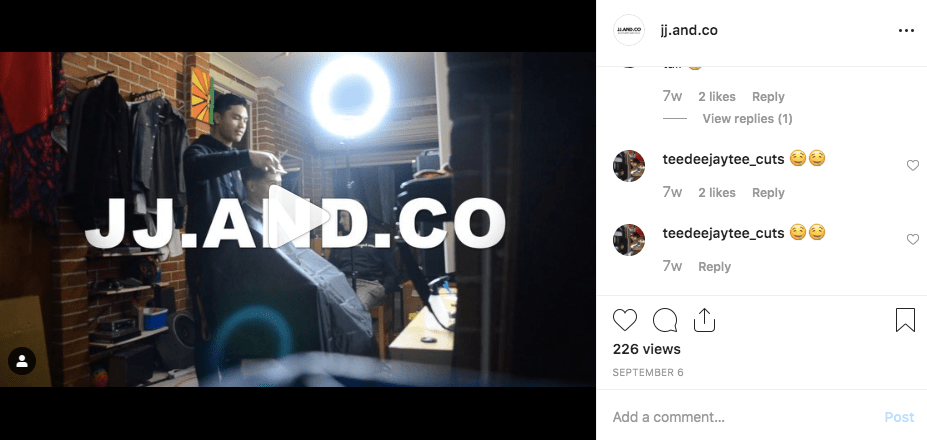
In reference to my DA, when producing the haircut video on Instagram and YouTube, I encountered copyright problems. This was through the audio used (No Halo – Brockhampton). As Brockhampton was owned by Sony they did not allow the use even though it was an instrumental.

No Halo – Brockhamptonhttps://www.youtube.com/watch?v=XdvwNjnDyaI&t=60s

Audio Usedhttps://www.youtube.com/watch?v=aqZbswJFC-E

To fix the problem I gained help from a fellow 114 student and used a ‘type beat’ which conveyed a similar style and beat.

PROTOTYPING

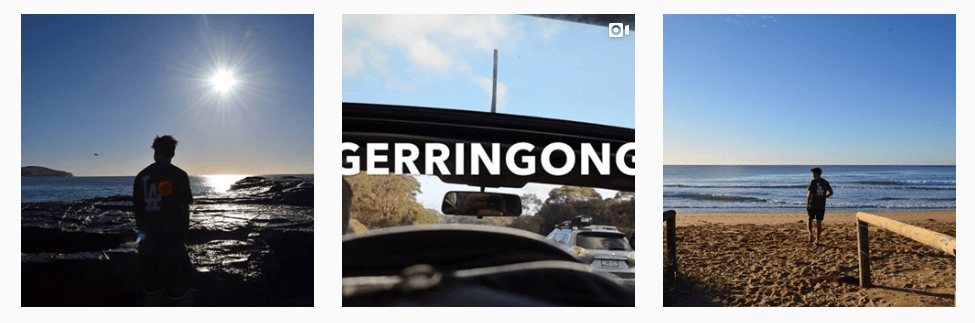
During the Prototyping stage overall I have mainly worked hard on producing the haircut video which was a significant iteration. Compared to the travel video I uploaded on my trip to Gerringong, the haircut video had to be made with a different style as it involved camera shots which involved movements or action compared to still shots in the Gerringong vid.

From the beginning videography was the major iteration in my DA and within this prototyping stage I have aimed to do something different.

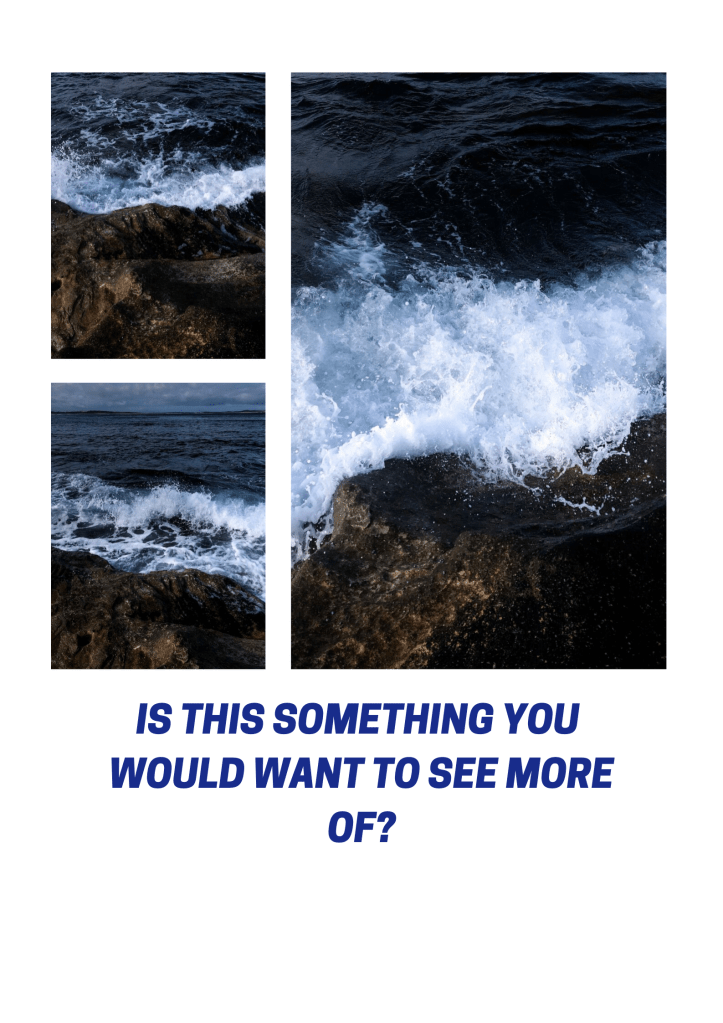
Furthermore, in the most recent photos posted I used my iPhone camera in an attempt to further prototype.

“you need testing and feedback for evaluation”

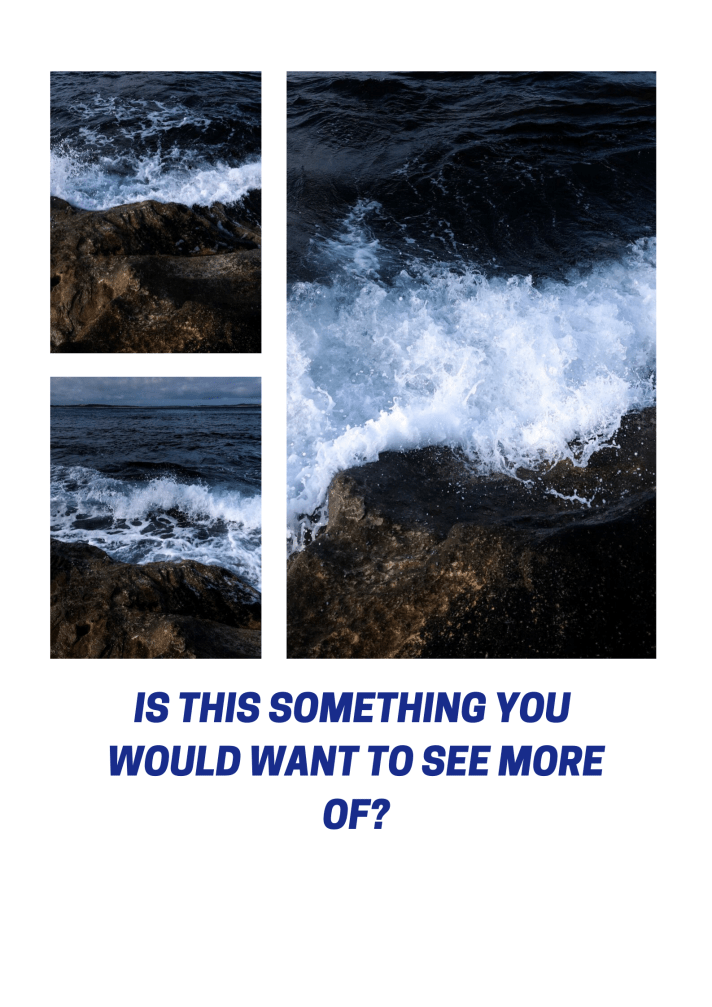
To allow for feedback I also posted on the story feature to ask whether my audience liked this type of content. The answers significantly favoured yes which told myself that I had to upload more of this content or generally water based.

Overall I am happy with the continuation of my DA. I want to keep it going at a steady pace with no incredible ideations or major prototyping changes.

James Muggeridge :))

REFERENCES

https://smartblogger.com/content-curation/

Perfect Imperfection: How Glitch Art Influences Design

DA BETA – JJ.AND.CO

My Digital Artefact is JJ.AND.CO.

JJ.AND.CO is a photography and videography-based artefact which aims to appeal to a traveller-based audience through the travel-based content I produce as well as the hashtags I use.

My content is located mainly on Instagram with both photography and videography distributed, and YouTube with only videography distributed.

Since my pitch I have aimed to maintain consistent production of content with heavily photography-based content fused together with two videos made as well.

I have aimed to iterate my content through production of videos since my pitch. I have worked hard on increasing the production through tools such as YouTube videos showing ways in which I can improve my editing skills on videos as well as my photography skills.

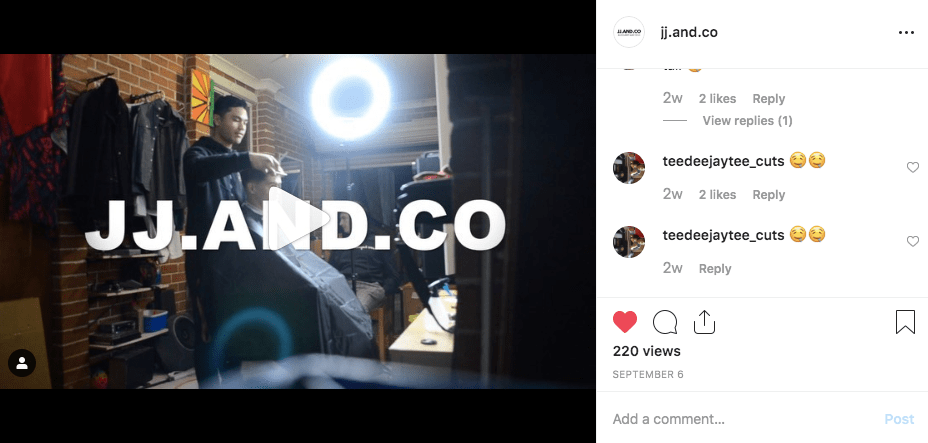
My videos have gained a lot of attraction with 418 views on Instagram, however a small amount on YouTube meaning I may have to force my audience to watch my videos on YouTube rather than Instagram to aim to increase my audience number.

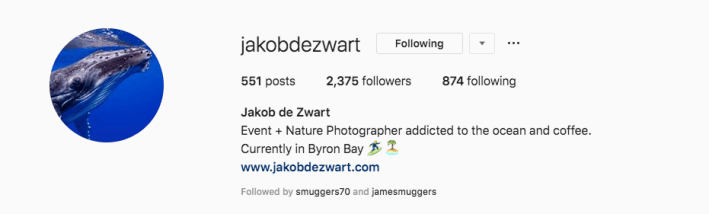
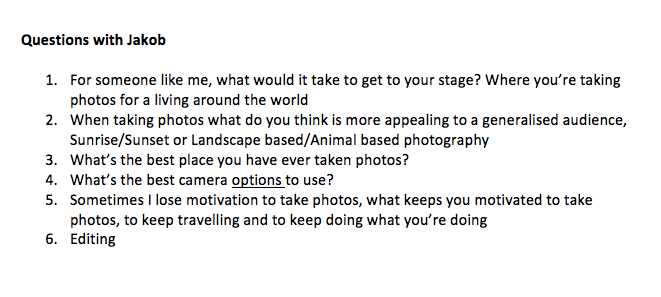
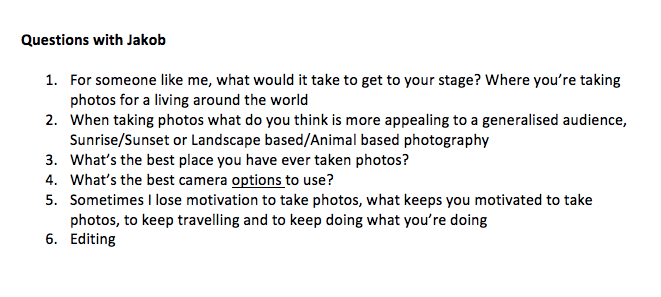
Since the pitch I have furthermore gained information and expertise from a professional photographer – Jakob De Zwart. I was luckily allowed to interview him in an act to gain knowledge regarding camera skills and how to improve my account overall. Overall, the interview allowed me to realise what I must improve to build my DA into a successful account.

Down below I have decided to include the questions which I asked

Overall I am pretty happy with the progression I’ve made with my DA as it is relatively old in comparison to other new DA’s. In terms of iteration I haven’t done too much other than with videos and switching content types for photography. This is because I do not want to over do change and thought since I was doing a travel based DA I should relatively stick to that niche.

James Muggeridge

Algorithmic control I

Intellectual Property and the Content Control Industry

Since the first appearance of copyright in 1790 with the ‘statute of Queen Anne (1710)’, content creators are able to copyright their own content to disallow other use from members of social media platforms. This law encourages people to create content in their own unique way. Nowadays, aspiring content creators now have to be knowledgeable in the laws of copyright as copying a major piece of content can lead to legal implications.

So, what can you do?

-Content in the Public Domain can be copied and remixed

-Fair use acts as a defence for copyright

Copyright allows content creators to copy the ideas and concepts yet not the material expression. This notion is explored in the Nike v Rentmeester case. In this case Rentmeester sued Nike for resembling the ‘Air Jordan Jumpman Logo’

A detailed summary of this case is given in the audio below.

For further information on copyright watch the video below