EP4 EPL VS A-LEAGUE SOCIAL MEDIA

COMPARISON

Hello and welcome to my final episode on my podcast series on the social media use of the EPL and the A-League. I’m going to be honest as I probably set out to do 5 episodes instead of 4 however with time constraints, I have decided to only do 4 podcasts.  

Just a recap on the series, Episode 1 was an introduction on what to expect, Episode 2 was on the EPL social media use and social and cultural transgressions of the league and Episode 3 was on the A-Leagues social media use, the adoption of premier leagues features and the negative side of being an Australian Footballer.  

This episode will look at how the two compare and where both can adapt features from each other.  

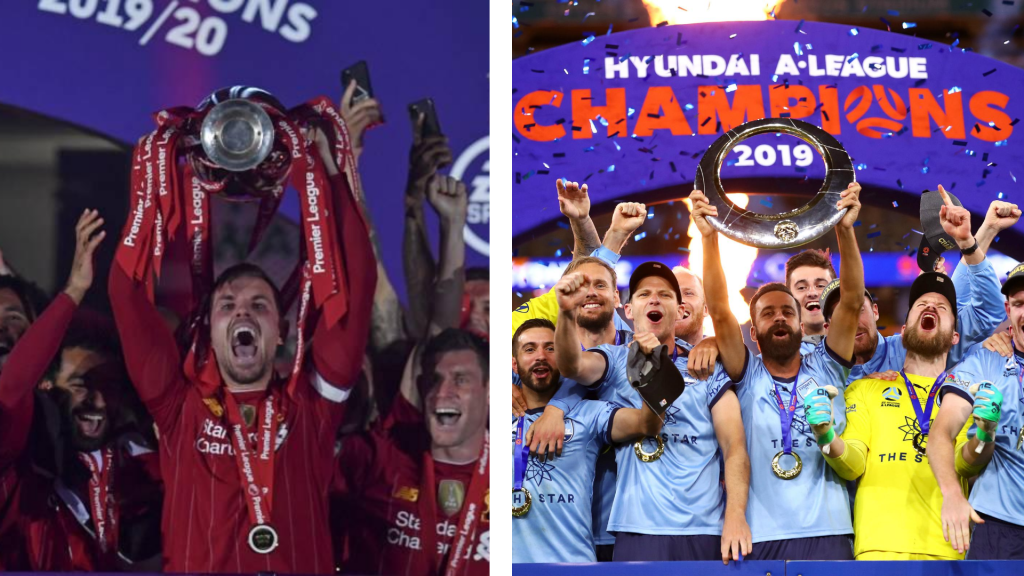
As mentioned in my introduction episode, I have experience with both leagues. Being a supporter since birth of both Liverpool and Sydney. I have also known the significant difference in talent and culture. EPL started hooliganism and ended it while the A-League with the emergence of new team Western Sydney Wanderers have brought it back into the game.  

However, in terms of social media, the A-League has as mentioned adopted features from the EPL. These features are the photography elements, transfer talks and the ability to promote their teams on social media by personalising their accounts.  

The A-League must adopt the ability to be more interactive with their audience. There is an obvious difference in feedback from the comment section. This may be due to the difference in overall followers; however, A-League still must be more interactive. Simple stuff like using more rhetorical questions and inviting audiences to comment on transfer news or any updates. A lack of fan art is quite easily seen which makes the EPL so significantly dominant when talking about audience interactivity.  

The EPL could look at adopting a more cultural approach. The A-League posts Spotify sounds which is Australian-based, and this could be done by the EPL which such a prominent grime scene.  

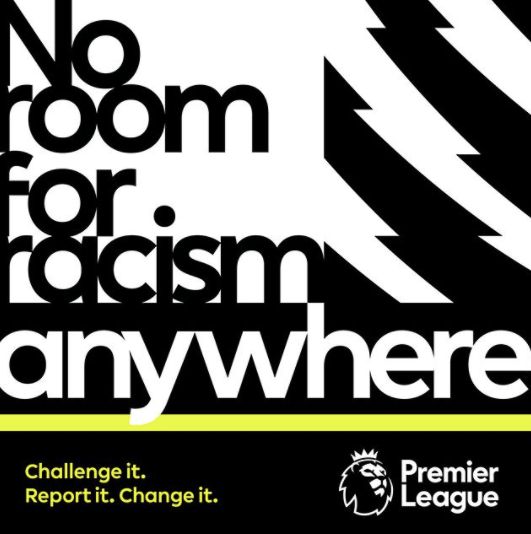
The EPL is known as an organisation which is promoting their stand for the fight against racism. The A-League of recent has had an issue with the battle with online abuse against players. Both prominent issues worldwide however its safe to say that the EPL are currently dealing with the issue of racism further than of the A-League. The EPL has culturally and socially trasngressed while the A-League is already culturally diverse and haven’t had too many problems with such an issue.  

EP2 EPL VS A-LEAGUE SOCIAL MEDIA

WHY IS SOCIAL MEDIA SO IMPORTANT IN THE EPL

Social media accounts such as Instagram, Twitter and YouTube have the ability to maintain relationships between fans and their chosen team or idols. As technology continues to develop, fans have been given the allowance to discuss any news or latest gossip with the touch of a button.

EPL has formed a huge fan base online through the distribution of content allowing for discussion on any highlights, news or transfer talk. Teams in the EPL have been able to personalise their social media base to home in on creating an identity for fans to believe in and follow.

In a ethnographic study done by Geoff Pearson called, ‘An ethnography of English football fans Cans, cops and carnivals’, crowds are compared to carnivals. The similarity shared is the gathering aspect. Crowds gather together singing and drinking while watching the game and most of the time what happens off the field is more important than what is actually happening on the field.

Fans sometimes only really want to look at the news and gossip which happens off the field. This is why the social media accounts are so important. They welcome the carnival connotation portrayed in Pearson’s ethnographic study as fans sometimes draw a blind eye to the scores and what’s happening on the field.

Examples of this sort of content include FIFA posts and the fan art. The younger audiences may not watch the live games, however, play with their favourite players and teams on the Xbox, Playstation or the PC. Some audiences may enjoy the visual pieces uploaded more so than the actual game. These sort of fans have developed through the rise of social media in sport.

CULTURAL AND SOCIAL TRANSGRESSIONS OF THE EPL AS A PLATFORM FOR CHANGE

“Racism came in the form of letters, chanting from the crowds, banana throwing, monkey chants, songs, and not just one or two but thousands singing racial abuse, chants, that kind of stuff, and letters through the post” –  

Cyrille Regis- former West Bromich Albion player and England Striker,1998 

Racism still places a dim and ignorant shadow of the world of football. Other leagues and countries more than the other, even though how vile and immoral it has become in the 21st century, it still remains.  

In the 1990’s, the fight against racism in Britain developed. A ‘let’s kick racism out of Football’ campaign begun at the start of the 1993/94 football season. This kickstarted the conversation and also acted as a catalyst for change in many other aspects. 

Stadiums begun to fill with female fans and ‘english hooliganism’ drew to a close. Crowd attendances increased through all four divisions, the EPL had started a renaissance which other leagues wished to follow. 

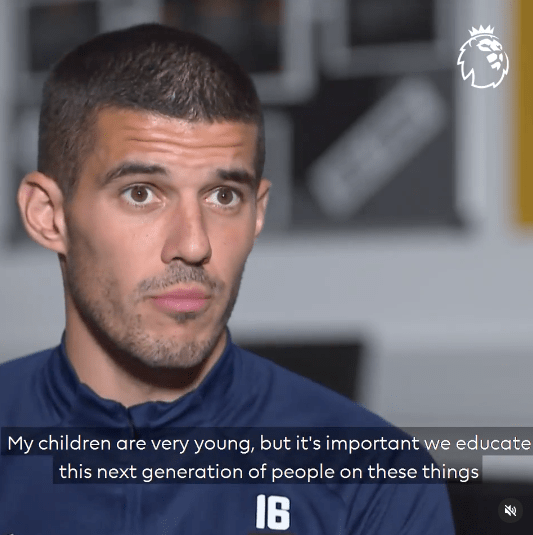
Key components of an instagram platform is the ability to inform, distribute and persuade. Videos shown above have been posted as a way to inform their audience on the experiences famous players have had with racism. These videos are distributed and acted as a way to persuade people who have been racist or have heard racism in public that it is not ok. 

REFERENCES

https://www.sciencedirect.com/science/article/pii/S1094996813000650?casa_token=LEeIO_bbNuEAAAAA:JNdlyvxsqELEqbD0dE9IIW2h7ustwTuihumQAjoP76CYBjiNu-TT7izYNfciTSC1x8E6W8kA9FY

https://www.emerald.com/insight/content/doi/10.1108/JOE-12-2014-0042/full/html?casa_token=9gB7EtVDsfEAAAAA:A-dDq88ubWlKPRtHrm0IfM1eQMBGQLbZ7JDjtL_7-tUTfzErHU9Nu-Pyhue6oeqK36nsJngKDI67PuSFUAXYziNkoLXKM31jTfcHn9acXII7kwf9zAY

EP1 EPL VS A-LEAGUE SOCIAL MEDIA

INTRODUCTION

INTRO

My name is James Muggeridge and for BCM241 I will be looking and comparing the social media use of the EPL (English premier league) and the A-League (Australian Football league). In doing this I will aim to find aspects of each leagues’ social media platform which helps them gain an advantage or disadvantage over the other.

So far, I have enjoyed the content highlighted in the subject and the concept of ethnography is something which I feel is so important within the practice of being a media worker. While saying this I think it would be good to highlight that as my career aspiration is to be a journalist, I think this DA looking at media Ehnographies will only benefit my learnings.  

In my pitch I was clearly to vague and didn’t exactly understand the idea of choosing a ‘niche’, however, homing in on social media as a part of the media landscape of both the EPL and the A-League will hopefully define my DA.

WHATS TO COME

I hope to cover the main platforms, Instagram and YouTube, through looking at how each league has transgressed over time and how they distribute their content to targeted audiences. Their are definitive techniques and methods which are applied to appeal to their own audience and this is something I would like to home in on. As football is heavily social and communal, it is so significant that teams and leagues must get their social media platforms on point.

My next episode will focus on how EPL manages their social media platforms. Instagram in particular is such a worldwide form of content which can be accessed by all ages and cultures for fans to digest. They boast different types of media to entice fans (photo, video, games etc). The platforms love to reflect on the history of the league and how prestigious it truly is. Doing this can truly appeal to all ages as the photo and game based content appeals to younger audiences whilst reflecting on the history of the game appeals to the older and more experienced audiences. I will also go into detail about my own experiences with the EPL and how social media entices me into viewing their content and even recently writing about it.

On the other hand, whilst ethnographically analysing the A-League I will look to discover what techniques could be taken from from the EPL which would build their profile, competing with other surrounding leagues. Football in Australia is not really ‘football’ yet it’s called soccer. This is because it shares it’s name with the AFL (Australian football league) and the Rugby (League and Union). Currently A-League is at the bottom of this football hierarchy as it has the lowest popularity record compared to the other two. This needs to change as Australian football has a rich history in the world of football. Whether it was Harry Kewell who played for Liverpool in the champions league or Tim Cahill, a worldwide icon for his incredible skill to head the ball. Their social media performance can evoke change and invite foreign viewers to believe in the game. Because at the moment the A-League is on a downward spiral and is it even close to being on the EPL’s level.

Podcasting on YouTube is a form of content which has sky rocketed. Whether it is a comedy podcast, a news podcast or a sports podcast, podcasting is a great way to distribute opinion on a world which is constantly changing and developing.


RESEARCH AND ETHICS

Throughout this early period in this subject I have learnt the core properties needed to be a research ethnographer. The idea of choosing a media niche was daunting, however, since choosing a topic which I enjoy and having planned out my research, my field site and problematising my niche, I have learnt so much about ethnography. 

To end the blog posts part of this semester I must identify the key readings which helped myself collect background research for my niche. Furthermore, I will also locate ethical considerations involved in my research and talk about how I will choose to manage them. 

BACKGROUND RESEARCH 

To help narrow down my niche or ‘problematise’ it, I focused on the comparison between the EPL and the A-League. This includes media-based aspects such as how the EPL is marketed compared to the A-League and how both are documented through journalistic outputs. 

Firstly, it was interesting to analyse a book written by Henry Jenkins called ‘Fans, bloggers and gamers’, which focused on the convergent nature of fan culture and sports. He emphasises the impact that media has had in converging within the world of sports. New technologies have enabled an average fan to ‘archive, annotate, appropriate and recirculate media’ in their own personalised style (Jenkins, 2006). This concept circles back to why I picked this niche, for my career aspirations to become a journalist. 

Firstly, Australian football (or soccer) is the most participated of the four Australian football codes (Rugby League, AFL, Rugby Union) yet is the fourth ranked in popularity and attendance.  This is based on its media attention, salaries and revenue generation out of the four total codes. The A-League is growing and must continue to grow linking ‘soccer’ with its multicultural community gained through its ethnic origins (Skinner, 2008).  

Switching from a competition which is in its growth stage to a fully grown financial beast in the world of football, the EPL. I insisted to find out why the English league was so big and came across a book which emphasised looking at the EPL as a business. Every club is a brand which have created their own fan culture and market themselves in their own personalised way (Goldblatt, 2015). This fan culture as well as the financial significance of the EPL displays the league as the richest in the world.  

ETHICS 

My duty of care as an ethnographic researcher is to follow, step by step, the ethics procedure which involves my chosen topic. Researching the EPL and collecting data will not inflict any emotional harm which is the 1st step in the ethics procedure. 

However, I must emphasise care as an important step in the procedure as it is my duty of care to be respectful and be upfront and honest about my research. I must inform my participants of the research I plan to conduct which involves the ‘participant information package’ as a guide. Another principal is allowance for participants to be anonymous. But as said in the lecture it will be tough in the digital landscape to fully confirm the anonymity of the participants. Furthermore, I as the research ethnographer must ask participants and negotiate the confidentiality of the data, hoping to grasp as much of the key data possible to be collected. 

James M

PROBLEMATISING AND PLANNING MY NICHE

SUMMARY OF MY NICHE

My Niche was picked based on my career aspirations of being a sports journalist. In particular I would love to write about the EPL (English Premier League). After learning the basics of the study of ethnography, it would only develop and increase my understanding of the English sport and my writing skills.

PROBLEMATISING

After help from Mohammad in my tutorial, problematising my niche, the EPL, was made easy. When you truly home in on the EPL there are many different factors which could be considered for problematisation.

I’ve decided to look at the comparison between the EPL and the Australian League, The A-League. EPL obviously is a much stronger league due to the high profile talent included, yet what are the other factors which has lead to this?

Since 1906, England have been playing against other international teams (Gibbons, 2014). Competitions such as the World Cup, the Euros and the Champions League allow England and domestic teams to play across borders. As the A-League is a fairly new league in comparison to the EPL (starting in 2004) the league has not been able to play as many international games, yet in recent times have competed in the Asian Cup and the Asian version of the Champions League.

So due to the EPL being such an experienced league, does the A-League have the potential to compete with them in the long-term? To answer this question I don’t think so due to the culture which is ingrained into English Football, but there are aspects of the EPL’s culture which could be adopted.

AUDIENCE AND RESEARCH

My audience in this ethnographic investigation includes:

  • Myself and future employers
  • Avid watchers of the EPL
  • Avid watchers of the A-League
  • Non-football watchers to see their take of what both competitions mean to them and Australia

I have already found a few different readings on fan culture in sport and in particular in England which will help with research. There are also many documentaries on the EPL and different fan cultures of different teams

Now that the EPL is in it’s off season it would be perfect timing to start watching back EPL games and comparing them to A-League games just to create a basic platform for my research. Also watching videos from Australian Players such as Aaron Mooy and Mathew Ryan on their experiences in the EPL compared to the A-League.

My research will be completed auto-ethnographically where I will be able to complete my research in my own personalised way (Wall, 2006). I like this method as it allows to draw on experiences of myself and my talent included in the investigation. Throughout my life I have always had an eye on the EPL and feel like I have a pretty good knowledge of the sport. This will help prove my research and personalise the investigation.

SCHEDULE

My Schedule started in WK1 where I found my niche. WK2 was where background research begun and this allowed myself to further research EPL and it’s external factors such as fan culture. I will give time for my pitch to make sure I give it enough time and it’s done to my best ability.

Studying content will focus in on my readings and experiences of fans from both the EPL and the A-League in a hope to truly investigate my Niche. WK10 is when I will begin my DA and report about my niche.

In doing this schedule I will hope to remain organised and truly focus on this idea of a ‘media niche. I am excited in doing this ethnographic investigation and can’t wait to learn more about this sport and competition that I love.

James M

MAPPING OUT MY NICHE

Since a field site refers to a ‘stage on which the social processes under study take place’ (Burrell, 2009), it would only be fair to look at the social processes undertaken both on and offline.  

Online focuses on the social media platforms and publications both distributing and creating content targeting an audience interested in EPL. My media niche, the English Premier League, is one of the top football competitions watched around the world. However, with COVID19 recently taken its toll on a global scale, the fan culture has been diminished with no fans allowed inside stadiums. Fan culture in the UK is what makes EPL so entertaining with the help of social media platforms such as Facebook, Instagram, Twitter and YouTube allowing for commenting through the curation and reframing of EPL games (Lawson, 2020). Publications such as ESPN, FOXSPORTS and BBC, just to name a few, write articles analysing games and reviewing any headlines.   

An offline field site homes in on the raw connection between team and fans. Supporter clubs act as public spheres allowing fans to connect and communicate their opinions. Sponsors and ambassadors including the big names of Nike, EA Sports and Barclays, are what keep the game running. The scale of these sponsors and ambassadors shows the popularity for the competition and the significant monetary value attached to it.  

I would be able to problematise my niche by researching the impact the EPL has on an Australian audience. With fans unable to watch games live, OPTUS SPORT allows coverage of full games, highlights, press conferences and historic games and is the only streaming service available in Australia. This as well as supporter clubs around big cities such as Sydney in Town Hall which allows for live viewing and connection between fans. I believe much like any other country, EPL is received in Australia to a high regard and it would be interesting to investigate the Australian fan culture in the A-League compared to the UK fan culture and what can be done to improve the Australian fan culture.  

In terms of an Australian fan, personally I believe we have a lot of catching up to do with other competitions. The talent is nowhere near the level we should be at and I don’t know whether we will ever get to the level of the EPL. However, with the ability to stream the EPL and support it with other fans, the fan culture is still significantly strong. I stem from a family of English born people and have been over there to watch games and do know the lengths that some fans will go for their local team.  

As said in my 1st blog I would love for my ethnographic research to display to my viewers the impact a sport can have on people’s lives and relationships. In doing this investigation I would love to update my journalistic skills by referring to ethnology and how important the concept is when truly understanding a topic. By mapping out my field site I can now identify the flows of communication and the social processes which occur within the EPL.  

James M

MY MEDIA NICHE – SPORTS CONTENT (EPL)

To start BCM241, we must write a blog introducing a media niche which we are interested or experienced in. A media niche focuses on a specific text, platform or practice within the broad media landscape.

My career aspiration is to write and be a journalist. Therefore, it’s only fair that I look at sports media as my media outlet. I want to talk about the EPL (English premier league) in particular as it’s something I am into. My niche will be sports related news and or journalism and how it’s received, especially in the UK where football is like a religion.

I have enjoyed watching and participating in sports my whole life and in a sense, it has become my life. Even at a young age I would always like to collate and record data from games whether it was player statistics or game reviews.  As I’ve grown up, I still found myself indulged into everyday sport, yet it’s now something I would like to make a career out of.  

I have started to curate content in the form of journalism. I have written for a collective group, RANSACK media, and focused solely on sports journalism. Writing about the EPL is something which I would like to start doing and undergoing an ethnographical investigation into the EPL will only better the content which I will plan to produce.

It’s clear to see how important ecology is within sports and leisure. Whether you’re playing a game and your team loses or you’re watching a game and your team wins, it will influence your emotions and opinions. Sport can also affect relationships within your peer group. It can allow opinion whether it’s over verbal communication or over social media. 

Sports journalism or any type of journalism will always come with feedback in the form of positive and negative communication. Ethnography is key in the profession which is journalism. Journalists must infatuate or immerse themselves within the culture and community of the topic chosen to write about.

In terms of reporting and writing about the EPL, there are many outlets which coincide with EPL content. There is ‘The Athletic’, ‘Premier League news’ and podcasts on YouTube such as ‘Football Daily”. The podcast by ‘Football Daily’ delves into the latest news and topics based on the EPL. To take an ethnographic look when studying this podcast we would have to focus on the communication between the speakers and the receiver or consumer. Furthermore it would be important to note the feedback it gets from the consumers.

As I said above, in the UK football is basically a religion. When your team loses it’s personal. When your team wins you must celebrate. In comparison to Australian football, in the UK teams and the cities are more collective. Football is the number one sport in the UK, so when a team plays the whole city will have their eyes on the game. For this obvious reason, the EPL league is popular around the world but would there be any significant cultural aspects which draw consumers into watching the league? I believe so and undergoing an ethnographic investigation would uncover this idea as well as other concepts to do with fan experience and actions.

Studying a sport will not be everyone’s taste, however looking at the EPL and the ability to bring people together, no matter what culture or beliefs, is something which will interest many.

By collecting, analysing and interpreting data, incorporating an ethnographical insight into EPL-based content will only better my understanding of the competition as a whole. This investigation will also better my journalistic skills by providing an in-depth look at my target market and content produced.

James M